Mu

Mu
Showing posts with label Zizek. Show all posts

Saturday, August 27, 2011

"Total administration and capitalist-individualist dynamics"


Jacques Lacan's Four Discourses - Slavoj Žižek
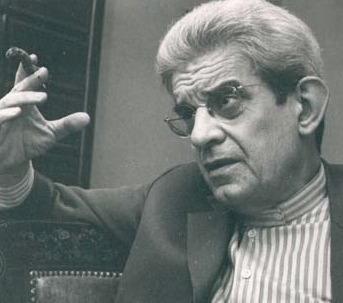

Jacques Lacan

Žižek in 'explores Lacanian theory' shocker.

Although Lacan's notion of "university discourse" circulates widely today, it is seldom used in its precise meaning (designating a specific "discourse," social link). As a rule, it functions as a vague notion of some speech being part of the academic interpretive machinery. In contrast to this use, one should always bear in mind that, for Lacan, university discourse is not directly linked to the university as a social institution-for example, he states that the Soviet Union was the pure reign of university discourse. Consequently, not only does the fact of being turned into an object of the university interpretive machinery prove nothing about one's discursive status-names like Kierkegaard, Nietzsche, or Benjamin, all three great antiuniversitarians whose presence in the academy is today all-pervasive-demonstrate that the "excluded" or "damned" authors are the IDEAL feeding stuff for the academic machine. Can the upper level of Lacan's formula of the university discourse - S2 directed toward a - not also be read as standing for the university knowledge endeavoring to integrate, domesticate, and appropriate the excess that resists and rejects it?

Lurking behind the reproach of belonging to university discourse is, of course, the question of the relationship between psychoanalysis and cultural studies. The first fact to note here is that what is missing in cultural studies is precisely psychoanalysis as a social link, structured around the desire of the analyst. Today, one often mentions how the reference to psychoanalysis in cultural studies and the psychoanalytic clinic supplement each other: cultural studies lack the real of clinical experience, while the clinic lacks the broader critico-historical perspective (say, of the historic specificity of the categories of psychoanalysis, Oedipal complex, castration, or paternal authority). The answer to this should be that each of the approaches should work on its limitation from within its horizon-not by relying on the other to fill up its lack. If cultural studies cannot account for the real of the clinical experience, this signals the insufficiency of its theoretical framework itself; if the clinic cannot reflect its historical presuppositions, it is a bad clinic. One should add to this standard Hegelian dialectical paradox (in fighting the foreign or external opposite, one fights one's own essence) its inherent supplement: in impeding oneself, one truly impedes one's external opposite. When cultural studies ignore the real of clinical experience, the ultimate victim is not cultural studies itself but the clinic, which remains caught in pretheoretical empiricism. And, vice versa, when the clinic fails (to take into account its historical presuppositions), the ultimate victim is theory itself, which, cut off from clinical experience, remains an empty ideological exercise. The ultimate horizon is here not the reconciliation of theory and clinic: their very gap is the positive condition of psychoanalysis. Freud already wrote that, in the conditions in which it would finally be possible, psychoanalysis would no longer be needed. Psychoanalytic theory is ultimately the theory of why its clinical practice is doomed to fail.

One of the telltale signs of university discourse is that the opponent is accused of being "dogmatic" and "sectarian." University discourse cannot tolerate an engaged subjective stance. Should not our first gesture be, as Lacanians, to heroically assume this designation of being "sectarian" and engage in a "sectarian" polemic?

University discourse as the hegemonic discourse of modernity has two forms of existence in which its inner tension ("contradiction") is externalized: capitalism, its logic of the integrated excess, of the system reproducing itself through constant self-revolutionizing, and the bureaucratic "totalitarianism" conceptualized in different guises as the rule of technology, of instrumental reason, of biopolitics, as the "administered world." How, precisely, do these two aspects relate to each other? We should not succumb to the temptation of reducing capitalism to a mere form of appearance of the more fundamental ontological attitude of technological domination; we should rather insist, in the Marxian mode, that the capitalist logic of integrating the surplus into the functioning of the system is the fundamental fact. Stalinist "totalitarianism" was the capitalist logic of self-propelling productivity liberated from its capitalist form, which is why it failed: Stalinism was the symptom of capitalism. Stalinism involved the matrix of general intellect, of the planned transparency of social life, of total productive mobilization- and its violent purges and paranoia were a kind of a "return of the repressed," the "irrationality" inherent to the project of a totally organized "administered society." This means the two levels, precisely insofar as they are two sides of the same coin, are ultimately incompatible: there is no metalanguage enabling us to translate the logic of domination back into the capitalist reproduction-through-excess, or vice versa.

The key question here concerns the relationship between the two excesses: the economic excess/surplus integrated into the capitalist machine as the force that drives it into permanent self-revolutionizing and the political excess of power-exercise inherent to modern power (the constitutive excess of representation over the represented: the legitimate state power responsible to its subjects is supplemented by the obscene message of unconditional exercise of Power-laws do not really bind me, I can do to you whatever I want, I can treat you as guilty if I decide to, I can destroy you if I say so).

Perhaps the key to this problem is provided by the historicity inscribed in Lacan's matrix of the four discourses, the historicity of modern European development. The master's discourse stands not for the premodern master, but for the absolute monarchy, this first figure of modernity that effectively undermined the articulate network of feudal relations and interdependences, transforming fidelity to flattery: it is the "Sun-King" Louis XIV with his L'état, c'est moi who is the master par excellence. Hysterical discourse and university discourse then deploy two outcomes of the vacillation of the direct reign of the master: the expert-rule of bureaucracy that culminates in the biopolitics of reducing the population to a collection of homo sacer (what Heidegger called "enframing," Adorno "the administered world," Foucault the society of "discipline and punish"); the explosion of the hysterical capitalist subjectivity that reproduces itself through permanent self-revolutionizing, through the integration of the excess into the "normal" functioning of the social link (the true "permanent revolution" is already capitalism itself).

Lacan's formula of the four discourses thus enables us to deploy the two faces of modernity (total administration and capitalist-individualist dynamics) as two ways to undermine the master's discourse: doubt about the efficiency of the master-figure (what Eric Santner called the "crisis of investiture") can be supplemented by the direct rule of the experts legitimized by their knowledge, or the excess of doubt, of permanent questioning, can be directly integrated into social reproduction. Finally, the analyst's discourse stands for the emergence of revolution-ary-emancipatory subjectivity that resolves the split of university and hysteria. In it, the revolutionary agent - a - addresses the subject from the position of knowledge that occupies the place of truth (i.e., which intervenes at the "symptomal torsion" of the subject's constellation), and the goal is to isolate, get rid of, the master signifier that structured the subject's (ideologico-political) unconscious.

Or does it? Jacques-Alain Miller has recently proposed that today the master's discourse is no longer the "obverse" of the analyst's discourse. [1] Today, on the contrary, our "civilization" itself-its hegemonic symbolic matrix, as it were-fits the formula of the analyst's discourse. The agent of the social link is today a, surplus enjoyment, the superego injunction to enjoy that permeates our discourse; this injunction addresses $ (the divided subject) who is put to work in order to live up to this injunction. The truth of this social link is S2, scientific-expert knowledge in its different guises, and the goal is to generate S1, the self-mastery of the subject, that is, to enable the subject to cope with the stress of the call to enjoyment (through self-help manuals, etc.). Provocative as this notion is, it raises a series of questions. If it is true, in what, then, resides the difference between the discursive functioning of civilization as such and the psychoanalytic social link? Miller resorts here to a suspicious solution: in our civilization, the four terms are kept apart, isolated; each operates on its own, while only in psychoanalysis are they brought together into a coherent link: "in civilization, each of the four terms remains disjoined... it is only in psychoanalysis, in pure psychoanalysis, that these elements are arranged into a discourse."

However, is it not that the fundamental operation of the psychoanalytic treatment is not synthesis, bringing elements into a link, but, precisely, analysis, separating what in a social link appears to belong together? This path, opposed to that of Miller, is indicated by Giorgio Agamben, who, in the last pages of The State of Exception, imagines two Utopian options of how to break out of the vicious cycle of law and violence, of the rule of law sustained by violence. [2] One is the Benjaminian vision of "pure" revolutionary violence with no relationship to the law. The other is the relationship to the law without regard to its (violent) enforcement, such as Jewish scholars do in their endless (re)interpretation of the Law. Agamben starts from the right insight that the task today is not synthesis but separation, distinction: nor bringing law and violence together (so that right will have might and the exercise of might will be fully legitimized), but thoroughly separating them, untying their knot. Although Agamben confers on this formulation an anti-Hegelian twist, a more proper reading of Hegel makes it clear that such a gesture of separation is what the Hegelian "synthesis" is effectively about. In it, the opposites are nor reconciled in a "higher synthesis"; it is rather that their difference is posited "as such."

The example of Paul may help us to clarify this logic of Hegelian reconciliation: the radical gap that he posits between life and death, between life in Christ and life in sin, is in no need of a further synthesis; it is itself the resolution of the "absolute contradiction" of Law and sin, of the vicious cycle of their murual imphcarion. In other words, once the distinction is drawn, once the subject becomes aware of the very existence of this other dimension beyond the vicious cycle of law and its transgression, the battle is formally already won. So, with regard to the old question of the passage from Kant to Hegel, Hegel's move is not to overcome the Kantian division, but, rather, to assert it as such, to drop the need for its overcoming, for the additional reconciliation of the opposites, that is, to gain insight - through a purely formal parallax shift - into how positing the distinction as such already is the looked-for reconciliation. The limitation of Kant is not in his remaining within the confines of finite oppositions, in his inability to reach the Infinite, but, on the contrary, in his very search for a transcendent domain beyond the realm of finite oppositions. Kant is not unable to reach the Infinite - what he is unable to see is how he already has what he is looking for.

However, is this vision not again the case of our late capitalist reality going further than our dreams? Are we not already encountering in our social reality what Agamben envisages as a Utopian vision? Isn't the Hegelian lesson of the global reflexivization-mediatization of our lives that it generates its own brutal immediacy? This has best been captured by Etienne Balibar's notion of excessive, nonfunctional cruelty as a feature of contemporary life, a cruelty whose figures range from "fundamentalist" racist and/or religious slaughter to the "senseless" outbursts of violence performed by adolescents and the homeless in our megalopolises, a violence one is tempted to call Id-Evil, a violence grounded in no utilitarian or ideological reasons. All the talk about foreigners stealing work from us or about the threat they represent to our Western values should not deceive us: under closer examination, it soon becomes clear that this talk provides a rather superficial secondary rationalization. The answer we ultimately obtain from a skinhead is that it makes him feel good to beat foreigners, that their presence disturbs him. What we encounter here is indeed Id-Evil, that is, the Evil structured and motivated by the most elementary imbalance in the relationship between the ego and jouissance, by the tension between pleasure and the foreign body of jouissance in the very heart of it. Id-Evil thus stages the most elementary short circuit in the relationship of the subject to the primordially missing object cause of his desire. What bothers us in the other (Jew, Japanese, African, Turk) is that he appears to entertain a privileged relationship to the object-the other either possesses the object treasure, having snatched it away from us (which is why we don't have it), or he poses a threat to our possession of the object.

What one should propose here is the Hegelian "infinite judgment," asserting the speculative identity of these "useless" and "excessive" outbursts of violent immediacy, which display nothing but a pure and naked ("non-sublimated") hatred of the Otherness, with the global reflexiv-ization of society. Perhaps the ultimate example of this coincidence is the fate of psychoanalytic interpretation. Today, the formations of the unconscious (from dreams to hysterical symptoms) have definitely lost their innocence and are thoroughly reflexivized: the "free associations" of a typical educated analysand consist for the most part of attempts to provide a psychoanalytic explanation of their disturbances, so that one is quite justified in saying that we have not only Jungian, Kleinian, Lacanian, and so on, interpretations of the symptoms, but symptoms themselves that are Jungian, Kleinian, Lacanian, and so on, that is, whose reality involves implicit reference to some psychoanalytic theory. The unfortunate result of this global reflexivization of interpretation (everything becomes interpretation, the unconscious interprets itself) is that the analyst's interpretation itself loses its performative "symbolic efficiency" and leaves the symptom intact in the immediacy of its idiotic jouissance.

What happens in psychoanalytic treatment is strictly homologous to the response of the neo-Nazi skinhead who, when really pressed for the reasons for his violence, suddenly starts to talk like social workers, sociologists, and social psychologists, quoting diminished social mobility, rising insecurity, the disintegration of paternal authority, the lack of maternal love in his early childhood-the unity of practice and its inherent ideological legifimization disintegrates into raw violence and its impotent, inefficient interpretation. This impotence of interpretation is also one of the necessary obverses of the universalized reflexivity hailed by the risk-society-theorists: it is as if our reflexive power can flourish only insofar as it draws its strength and relies on some minimal "prereflex-ive" substantial support that eludes its grasp, so that its universaliza-tion comes at the price of its inefficiency, that is, by the paradoxical re-emergence of the brute real of "irrational" violence, impermeable and insensitive to reflexive interpretation. So the more today's social theory proclaims the end of nature or tradition and the rise of the "risk society," the more the implicit reference to "nature" pervades our daily discourse: even when we do not speak of the "end of history," do we not put forward the same message when we claim that we are entering a "postideological" pragmatic era, which is another way of claiming that we are entering a postpolitical order in which the only legitimate conflicts are ethnic/cultural conflicts? Typically, in today's critical and political discourse, the term worker has disappeared from the vocabulary, substituted or obliterated by immigrants or immigrant workers: Algerians in France, Turks in Germany, Mexicans in the United States. In this way, the class problematic of workers' exploitation is transformed into the multiculturalist problematic of "intolerance of otherness," and the excessive investment of the multiculturalist liberals in protecting immigrants' ethnic rights clearly draws its energy from the "repressed class dimension. Although Francis Fukuyama's thesis on the "end of history" quickly fell into disrepute, we still silently presume that the liberal-democratic capitalist global order is somehow the finally found "natural" social regime, we still implicitly conceive conflicts in the Third World countries as a subspecies of natural catastrophes, as outbursts of quasi-natural violent passions, or as conflicts based on the fanatic identification to one's ethnic roots (and what is "the ethnic" here if not again a code word for "nature"?). And, again, the key point is that this all-pervasive renaturalization is strictly correlative to the global reflexiviza-tion of our daily lives.

What this means, with regard to Agamben's Utopian vision of untying the knot of the Law and violence is that, in our postpohtical societies, this knot is already untied: we encounter, on the one hand, the globalized interpretation whose globalization is paid for by its impotence, its failure to enforce itself, to generate effects in the real, and, on the other hand, explosions of the raw real of a violence that cannot be affected by its symbolic interpretation. Where, then, is the solution here, between the claim that, in today's hegemonic constellation, the elements of the social link are separated and as such to be brought together by psycho-analysis (Miller), and the knot between Law and violence to be untied, their separation to be enacted (Agamben)? What if these two separations are not symmetrical? What if the gap between the symbolic and the raw real epitomized by the figure of the skinhead is a false one, since this real of the outbursts of the "irrational" violence is generated by the globalization of the symbolic?

When, exactly, does the objet a function as the superego injunction to enjoy? When it occupies the place of the master signifier, that is, as Lacan formulated it in the last pages of his Seminar XI, when the short circuit between S1 and a occurs. The key move to be accomplished in order to break the vicious cycle of the superego injunction is thus to enact the separation between S1 and a. Consequently, would it not be more productive to follow a different path, that is, to start with the different modus operandi of l'objet a, which in psychoanalysis no longer functions as the agent of the superego injunction-as it does in the discourse of perversion? This is how Miller's claim of the identity of the analyst's discourse and the discourse of today's civilization should be read: as an indication that this latter discourse (social link) is that of perversion. That is to say, the fact that the upper level of Lacan's formula of the analyst's discourse is the same as his formula of perversion (a-$) opens up a possibility of reading the entire formula of the analyst's discourse also as a formula of the perverse social link: its agent, the masochist pervert (the pervert par excellence), occupies the position of the object instrument of the other's desire, and, in this way, through serving his (feminine) victim, he posits her as the hystericized/divided subject who "doesn't know what she wants." Rather, the pervert knows it for her, that is, he pretends to speak from the position of knowledge (about the other's desire) that enables him to serve the other; and, finally, the product of this social link is the master signifier, that is, the hysterical subject elevated into the role of the master (dominatrix) whom the pervert masochist serves.

In contrast to hysteria, the pervert knows perfectly what he is for the Other: a knowledge supports his position as the object of his Other's (divided subject's) jouissance. The difference between the social link of perversion and that of analysis is grounded in the radical ambiguity of objet a in Lacan, which stands simultaneously for the imaginary fantasmatic lure/screen and for that which this lure is obfuscating, for the void behind the lure. Consequently, when we pass from perversion to the analytic social link, the agent (analyst) reduces himself to the void, which provokes the subject into confronting the truth of his desire. Knowledge in the position of "truth" below the bar under the "agent," of course, refers to the supposed knowledge of the analyst, and, simultaneously, signals that the knowledge gained here will not be the neutral objective knowledge of scientific adequacy, but the knowledge that concerns the subject (analysand) in the truth of his subjective position.

Recall, again, Lacan's outrageous statements that, even if what a jealous husband claims about his wife (that she sleeps around with other men) is all true, his jealousy is still pathological. Along the same lines, one could say that, even if most of the Nazi claims about the Jews were true (they exploit Germans, they seduce German girls), their anti-Semitism would still be (and was) pathological - because it represses the true reason the Nazis needed anti-Semitism in order to sustain their ideological position. So, in the case of anti-Semitism, knowledge about what the Jews "really are" is a fake, irrelevant, while the only knowledge at the place of truth is the knowledge about why a Nazi needs a figure of the Jew to sustain his ideological edifice. In this precise sense, the analyst's discourse produces the master signifier, the swerve of the patient's knowledge, the surplus element that situates the patient's knowledge at the level of truth: after the master signifier is produced, even if nothing changes at the level of knowledge, the same knowledge as before starts to function in a different mode. The master signifier is the unconscious sinthome, the cipher of enjoyment, to which the subject was unknowingly subjected.

The crucial point not to be missed here is how the late Lacan's identification of the subjective position of the analyst as that of objet petit a presents an act of radical self-criticism. Earlier, in the 1950's, Lacan conceived the analyst not as the small other (a), but, on the contrary, as a kind of stand-in for the big Other (A, the anonymous symbolic order). At this level, the function of the analyst was to frustrate the subject's imaginary misrecognitions and to make them accept their proper symbolic place within the circuit of symbolic exchange, the place that effectively (and unbeknownst to them) determines their symbolic identity. Later, however, the analyst stands precisely for the ultimate inconsistency and failure of the big Other, that is, for the symbolic order's inability to guarantee the subject's symbolic identity.

One should thus always bear in mind the thoroughly ambiguous status of objet a in Lacan. Miller recently proposed a Benjaminian distinction between "constituted anxiety" and "constituent anxiety": while the first designates the standard notion of the terrifying and fascinating abyss of anxiety that haunts us, its infernal circle that threatens to draws us in, the second stands for the "pure" confrontation with objet a as constituted in its very loss. [3] Miller is right to emphasize here two features: the difference that separates constituted from constituent anxiety concerns the status of the object with regard to fantasy. In a case of constituted anxiety, the object dwells within the confines of a fantasy, while we get the constituent fantasy only when the subject "traverses the fantasy" and confronts the void, the gap, filled up by the fantasmatic object. Clear and convincing as it is. Miller's formula misses the true paradox or, rather, ambiguity of objet a: when he defines objet a as the object that overlaps with its loss, that emerges at the very moment of its loss (so that all its fantasmatic incarnations, from breasts to voice and gaze, are metonymic figurations of the void of nothing), he remains within the horizon of de- sire- the true object cause of desire is the void filled in by its fantasmatic incarnations. While, as Lacan emphasizes, objet a is also the object of the drive, the relationship is here thoroughly different. Although in both cases, the link between object and loss is crucial, in the case of objet a as the object cause of desire, we have an object which is originally lost, which coincides with its own loss, which emerges as lost, while, in the case of objet a as the object of the drive, the "object" is directly the loss itself. In the shift from desire to drive, we pass from the lost object to loss itself as an object. That is to say, the weird movement called "drive" is not driven by the "impossible" quest for the lost object, bur by a push to directly enact the "loss" - the gap, cut, distance - itself. There is thus a double distinction to be drawn here: not only between objet a in its fantasmaric and posrfantasmatic status, but also, within this postfantas-matic domain itself, between the lost object cause of desire and the object loss of the drive. Far from concerning an abstract scholastic debate, this distinction has crucial ideologico-political consequences: it enables us to articulate the libidinal dynamics of capitalism.

Following Miller himself, a distinction has to be introduced here between lack and hole. Lack is spatial, designating a void within a space, while the hole is more radical-it designates the point at which this spatial order itself breaks down (as in the "black hole" in physics). Therein resides the difference between desire and drive: desire is grounded in its constitutive lack, while drive circulates around a hole, a gap in the order of being. In other words, the circular movement of drive obeys the weird logic of the curved space in which the shortest distance between two points is not a straight line, but a curve: the drive "knows" that the shortest way to attain its aim is to circulate around its goal-object. At the immediate level of addressing individuals, capitalism of course interpellates them as consumers, as subjects of desires, soliciting in them ever new perverse and excessive desires (for which it offers products to satisfy them); furthermore, it obviously also manipulates the "desire to desire," celebrating the very desire to desire ever new objects and modes of pleasure. However, even if if already manipulates desire in a way that takes into account the fact that the most elementary desire is the desire to reproduce itself as desire (and not to find satisfaction), at this level, we do not yet reach the drive. The drive inheres to capitalism at a more fundamental, systemic level: drive propels the entire capitalist machinery; it is the impersonal compulsion to engage in the endless circular movement of expanded self-reproduction. The capitalist drive thus belongs to no definite individual - it is rather that those individuals who act as direct "agents" of capital (capitalists themselves, top managers) have to practice it. We enter the mode of the drive when (as Marx put it) the circulation of money as capital becomes "an end in itself, for the expansion of value takes place only within this constantly renewed movement. The circulation of capital has therefore no limits." One should bear in mind here Lacan's well-known distinction between the aim and the goal of drive: while the goal is the object around which drive circulates, its (true) aim is the endless continuation of this circulation as such.

Notes:

[1] Miller, Jacques-Alain, "La passe: Conférence de Jacques-Alain Miller." paper presented at the fourth Congrès de l'AMP, Comandatuba - Bahia, Brazil, August 9-12, 2004.

[2] Agamben, Giorgio, The State of Exception, Chicago: University of Chicago Press, 2004.

[3] Miller, J.-A., "Le nom-du-père, s'en passer, s'en servir," available at www.lacan.com. It is interesting to note how, in his very polemics against the Hegelian Aufhebug, Miller repeats its operation. That is to say, when Miller deploys the concept of anxiety as the effect which signals the proximity of the Real, he opposes it to the central role of the Name-of-the-Father, of the paternal Law, in Lacan's previous thought: the paternal Law functions as the operator of Aufhebung, of the "significantization," symbolic mediation/integration, of the real, while anxiety enters as a remainder of the Real that resists its symbolic Aufhebung. However, when Miller asks the question of what happens with the paternal Law after this introduction of anxiety as the signal of the Real, he strangely reproduces the very terms of Aufhebung. Of course, the Name-of-the-Father continues to play a function, but a subordinate one within a new theoretical context. In short, the Name-of-the-Father is maintained, negated and elevated to a higher level - the very three features of the Hegelian Aufhebung.


Friday, August 19, 2011

Spontaneous rebellion and the subjective skepticisms of Slavoj Zizek


Passages à l'acte?

Confessions of a Zizek cultist
by Jay Rothermel


If Zizek is looking for the material basis for the UK's rebellion, he need look no further than the following video: http://www.youtube.com/watch?feature=player_embedded&v=mVxJUeN2TFk

The class reality it expresses needs to be understood as existing for - let us say - a century in every city, town and borough. The experience is as much a part of the life of oppressed nationalities, and especially the youth, in the US and UK as knowing in one's bones that the sun will rise in the morning. Yes, society knows I am its enemy, and society's cops are not taking any chances: they will go out of their way to keep reminding the youth.

These social explosions erupt every few decades because that is all the longer unorganized and un-lead [in any more than an ad hoc sense] fury and rage at powerlessness can build up steam before release. When SZ says the "protest demanded nothing" he is only correct to the extent that the rebel populace had not nailed their demands to the city hall door or run their candidate for office or printed their manifesto in their own newspaper. Capitalism today has no spatial capability to allow a constructive rehearsal and demonstration of such grievances against the foundations of an abominable social system. And today there is no leadership to shape it, and to raise up a broader consciousness of independent class or national struggle. The laughably opportunist MPs for the UK rebel zones despise their electors, and know they are there in a social worker or parole officer capacity to keep the lid on things one day longer.

I agree with SZ when he writes that rebellions such as those earlier this month in the UK emerge from a "....society which celebrates choice but in which the only available alternative to enforced democratic consensus is a blind acting out." But this is only a surface appearance. When he writes, "Opposition to the system can no longer articulate itself in the form of a realistic alternative...." I could not disagree more. There is an articulation, and it follows a class dividing line. The UK's capitalist ruling families see the realistic alternative to rebellion in further repression: incarceration of the culprits and the enforced eviction of their families. Were the outrage of this response by the UK rulers not so outrageous, one could write it off as simply cynically Dickensian. And what of a "realistic alternative" on the other side of the class divide? Well, there's the rub. Today there are many activists ready to organize protest, many ready to try to bring the wheels of injustice to a grinding halt. But the solution to the UK rebellion does not lie in more sympathetic policing or the election of new local council members and MPs. It lies in a vanguard organizing and shaping the courageous, ambitious, and selfless energy of rebel youth in Tottenham and all over the UK to end the dictatorship of capital.

According to SZ, the "left faces the problem of 'determinate negation': what new order should replace the old one after the uprising, when the sublime enthusiasm of the first moment is over?" Unless a revolutionary party has won the trust and confidence of the rebel masses, any struggle will crest and subside without sustaining energy. Revolutionary parties provide leadership, education, development of cadre, and the bridge to sustain spontaneous energies over the long term. A mass movement for socialism, for workers power, under the leadership of a revolutionary party that had won the allegiance of the masses, could have radically altered the relationship of class forces in the UK over the last 24 months, and created a political climate where the depredations of cops and broader ruling class austerity drives would not be permitted.

The material basis of spontaneous rebellion, from Tunisia to Egypt, from Greece to the UK, will breed new rebellions. Building mass revolutionary socialist parties to transform these struggles must be the starting point for Marxist-Leninists today. Our irreplaceable role is not so much helping organize and publicize each individual struggle or motion of resistance, but uniting and generalizing the lessons and leadership of such struggles. And figuring out what to do next on the road to workers' power. It is only in this way that the enormous sacrifices by rebels will not be squandered, as they were thirty years ago in the UK, or in 1992 during the LA rebellion in the United States.

SZ's article on the UK rebellions is a series of subjective and skeptical footnotes to an objectively significant and heroic chapter in the spontaneous mass resistance against cop brutality and broader prerogatives of capital. He spends time shaking his head over the short-fall of spontaneous struggles that did manage to move forward dramatically in Tunisia, Egypt, and Greece, but have so far not had the organizational continuity and vanguard class consciousness to truly alter the terms under which the bourgeoisie seeks to rule today. In the end he can only hope and keep his fingers crossed: "one needs a strong body able to reach quick decisions and to implement them with all necessary harshness." The wish for a "strong body" smacks of putchism, and expressly underlines the gulf between a developing rebel mood among the most marginalized portions of the proletariat, creating for the first time in decades the possibility of rebuilding vanguard communist leadership, and the hand-wringing of the radical petty-bourgeois intelligentsia, which can only hypothesize communism.


--


.

Monday, December 6, 2010

SZ on "climate change" - empty, with loftiness of tone


December 2, 2010

The End of Nature

The big ecological disasters of 2010 fit into the ancient cosmological model, in which the universe is made up of four basic elements: AIR, volcanic ash clouds from Iceland immobilizing airline traffic over Europe; EARTH, mudslides and earthquakes in China; FIRE, rendering Moscow almost unlivable; WATER, the tsunami in Indonesia, floods displacing millions in Pakistan.

Such recourse to traditional wisdom offers no true insight into the mysteries of our wild Mother Nature’s whims, however. It’s a consolation device, really, allowing us to avoid the question we all want to ask: Will more events of such magnitude turn up on nature’s agenda for 2011?

In our disenchanted, post-religious, ultra-technological era, catastrophes can no longer be rendered meaningful as part of a natural cycle or as an expression of divine wrath. Ecological catastrophes — which we can view continually and close-up, thanks to our 24/7 plugged-in world — become the meaningless intrusions of a blind, destructive rage. It’s as if we are witnessing the end of nature.

Today we look to scientific experts to know all. But they do not, and therein lies the problem. Science has transformed itself into specialized knowledge, offering an inconsistent array of conflicting explanations called “expert opinions.” But if we blame the scientific-technological civilization for many of our difficulties, we cannot do without that same science to fix the damage — only scientists, after all, can “see” the ozone hole. Or, as a line from Wagner’s “Parsifal” puts it, “The wound can only be healed by the spear that made it.” There is no way back to pre-scientific holistic wisdom, to the world of Earth, Wind, Air and Fire.

While science can help us, it can’t do the whole job. Instead of looking to science to stop our world from ending, we need to look at ourselves and learn to imagine and create a new world. At least for those of us in the West, it’s difficult to accept being passive observers who must sit and watch as our fates are revealed.

Enter the perverse pleasure of premature martyrdom: “We offended Mother Nature, so we are getting what we deserve!” It’s deceptively reassuring to be ready to assume guilt for the threats to our environment. If we are guilty, then it all depends on us; we can save ourselves simply by changing our lives. We frantically and obsessively recycle old paper, buy organic food — whatever, just so we can be sure we are doing something, making our contribution.

But like the anthropomorphic universe, magically designed for man’s comfort, the so-called balance of nature, which humankind brutally destroys with its hubris, is a myth. Catastrophes are part of natural history. The fact that ash from a modest volcanic outburst in Iceland grounded most of the planes in Europe is a much-needed reminder of how we, humans, with our tremendous power over nature, are nothing but one of the living species on Earth, depending on the delicate balance of its elements.

So what might the future hold? One thing is clear: We should accustom ourselves to a much more nomadic way of life. Gradual or sudden change in our environment, about which science can do little more than offer a warning, may force unheard-of social and cultural transformations. Suppose a new volcanic eruption makes a place uninhabitable: Where will the inhabitants find a home? In the past, large population movements were spontaneous processes, full of suffering and loss of civilizations. Today, when weapons of mass destruction are available not only to states but even to local groups, humanity simply can’t afford a spontaneous population exchange.

What this means is that new forms of global cooperation, which do not depend on the market or on diplomatic negotiations, must be invented. Is this an impossible dream?

The impossible and the possible are simultaneously bursting into excess. In the realms of personal freedom and scientific technology, the impossible is more and more possible. We can entertain the prospect of enhancing our physical and psychic abilities; of manipulating our biological traits via interventions into the genome; of achieving the tech-gnostic dream of immortality by encoding our distinguishing traits and feeding the composite of our identities into a computer program.

When it comes to socioeconomic relations, however, we perceive our era as one of maturity, and thus acceptance. With the collapse of Communism, we abandoned the old millenarian utopian dreams and accepted the constraints of reality — that is, capitalist socioeconomic reality — with all its impossibilities. We cannot engage in large collective acts, which necessarily end in totalitarian terror. We cannot cling to the old welfare state, which makes us noncompetitive and leads to economic crisis. We cannot isolate ourselves from the global market.

For us, it’s easier to imagine the end of the world than serious social change. Witness the numerous blockbusters about global catastrophe and the conspicuous absence of films about alternate societies.

Maybe it’s time to reverse our concept of what is possible and what isn’t; maybe we should accept the impossibility of omnipotent immortality and consider the possibility of radical social change. If nature is no longer a stable order on which we can rely, then our society should also change if we want to survive in a nature that is no longer the good caring mother, but a pale and indifferent one.

Slavoj Zizek is a Slovenian-born political philosopher and cultural critic. He is a scholar or visiting professor at the University of Ljubljana in Slovenia, the European Graduate School in Switzerland and a number of American universities.

Friday, November 26, 2010

Cynicism is the answer of the ruling culture

Cynicism as a Form of Ideology

by Slavoj Žižek

The most elementary definition of ideology is probably the well-known phrase from Marx’s Capital: ‘Sie wissen das nicht, aber sie tun es‘they do not know it, but they are doing it’. The very concept of ideology implies a kind of basic, constitutive naïveté: the misrecognition of its own presuppositions, of its own effective conditions, a distance, a divergence between so-called social reality and our distorted representation, our false consciousness of it. That is why such a ‘naive consciousness’ can be submitted to a critical-ideological procedure. The aim of this procedure is to lead the naïve ideological consciousness to a point at which it can recognize its own effective conditions, the social reality that it is distorting, and through this very act dissolve itself. In the more sophisticated versions of the critics of ideology—that developed by the Frankfurt School, for example—it is not just a question of seeing things (that is, social reality) as they ‘really are’, of throwing away tile distorting spectacles of ideology; the main point is to see how the reality itself cannot reproduce itself without this so-called ideological mystification. The mask is not simply hiding the real state of things; the ideological distortion is written into its very essence.

We find, then, the paradox of a being which can reproduce itself only in so far as it is misrecognized and overlooked: the moment we see it ‘as it really is’, this being dissolves itself into nothingness or, more precisely, it changes into another kind of reality. That is why we must avoid the simple metaphors of demasking, of throwing away the veils which are supposed to hide the naked reality. We can see why Lacan, in his Seminar on The Ethic of Psychoanalysis, distances himself from the liberating gesture of saying finally that ‘the emperor has no clothes’. The point is, as Lacan puts it, that the emperor is naked only beneath his clothes, so if there is an unmasking gesture of psychoanalysis, it is closer to Alphonse Allais’s well-known joke, quoted by Lacan: somebody points at a woman and utters a horrified cry, ‘Look at her, what a shame, under her clothes, she is totally naked’ (Lacan, 1986, p.231).

But all this is already well known: it is the classic concept of ideology as ‘false consciousness’, misrecognition of the social reality which is part of this reality itself. Our question is: Does this concept of ideology as a naive consciousness still apply to today’s world? Is it still operating today? In the Critique of Cynical Reason, a great bestseller in Germany (Sloterdijk, 1983), Peter Sloterdijk puts forward the thesis that ideology’s dominant mode of functioning is cynical, which renders impossible—or, more precisely, vain—the classic critical-ideological procedure. The cynical subject is quite aware of the distance between the ideological mask and the social reality, but he none the less still insists upon the mask. The formula, as proposed by Sloterdijk, would then be: ‘they know very well what they are doing, but still, they are doing it’. Cynical reason is no longer naïve, but is a paradox of an enlightened false consciousness: one knows the falsehood very well, one is well aware of a particular interest hidden behind an ideological universality, but still one does not renounce it.

We must distinguish this cynical position strictly from what Sloterdijk calls kynicism. Kynicism represents the popular, plebeian rejection of the official culture by means of irony and sarcasm: the classical kynical procedure is to confront the pathetic phrases of the ruling official ideology—its solemn, grave tonality—with everyday banality and to hold them up to ridicule, thus exposing behind the sublime noblesse of the ideological phrases the egotistical interests, the violence, the brutal claims to power. This procedure, then, is more pragmatic than argumentative: it subverts the official proposition by confronting it with the situation of its enunciation; it proceeds ad hominem (for example when a politician preaches the duty of patriotic sacrifice, kynicism exposes the personal gain he is making from the sacrifice of others).

Cynicism is the answer of the ruling culture to this kynical subversion: it recognizes, it takes into account, the particular interest behind the ideological universality, the distance between the ideological mask and the reality, but it still finds reasons to retain the mask. This cynicism is not a direct position of immorality, it is more like morality itself put in the service of immorality—the model of cynical wisdom is to conceive probity, integrity, as a supreme form of dishonesty, and morals as a supreme form of profligacy, the truth as the most effective form of a lie. This cynicism is therefore a kind of perverted ‘negation of the negation’ of the official ideology: confronted with illegal enrichment, with robbery, the cynical reaction consists in saying that legal enrichment is a lot more effective and, moreover, protected by the law. As Bertolt Brecht puts it in his Threepenny Opera: ‘what is the robbery of a bank compared to the founding of a new bank?’

It is clear, therefore, that confronted with such cynical reason, the traditional critique of ideology no longer works. We can no longer subject the ideological text to ‘symptomatic reading’, confronting it with its blank spots, with what it must repress to organize itself, to preserve its consistency—cynical reason takes this distance into account in advance. Is then the only issue left to us to affirm that, with the reign of cynical reason, we find ourselves in the so-called post-ideological world? Even Adorno came to this conclusion, starting from the premiss that ideology is, strictly speaking, only a system which makes a claim to the truth—that is, which is not simply a lie but a lie experienced as truth, a lie which pretends to be taken seriously. Totalitarian ideology no longer has this pretension. It is no longer meant, even by its authors, to be taken seriously—its status is just that of a means of manipulation, purely external and instrumental; its rule is secured not by its truth-value but by simple extra-ideological violence and promise of gain.

It is here, at this point, that the distinction between symptom and fantasy must be introduced in order to show how the idea that we live in a post-ideological society proceeds a little too quickly: cynical reason, with all its ironic detachment, leaves untouched the fundamental level of ideological fantasy, the level on which ideology structures the social reality itself.


SOURCE: Žižek, Slavoj. The Sublime Object of Ideology (London; New York: Verso, 1989), pp. 28-30.

Thursday, November 25, 2010

"Fanatic mode" - Zizek as "Christian Marxist Messiah"

The Žižekian Counter-Revolution

[Slovenian Lacanian-Marxist-Hegelian philosopher and cultural theorist, Slavoj Žižek is visiting India currently and will be delivering a few lectures here. This post is prompted by his visit...

imaaN mujhe roke hai jo khiNche hai mujhe kufr
ka’aba mere peeche hai kaleesa mere aage

[Faith holds me back when infidelity beckons/
Behind me, the Kaaba; before me, the Church]

It is difficult to miss the immense subversiveness of the dilemma encapsulated in Ghalib’s couplet above. This dilemma of the believer is produced by the constant threat of corruption – the Kaaba behind the believing Muslim holds him back from indulging in, or falling prey to, the infidelities and temptations that always lie in wait.

Substitute Marxism for Kaaba and ‘postmodernism’ for Church, and you have the perfect Žižekian incarnation of this classic Ghalibian dilemma: Not quite at home in the Faith (Lacan, jouissance, surplus-enjoyment, the Real…) and yet, not able to leave it either, for the fear of what might befall one deserting the Order. Faith is the anchor that holds one back from committing all kinds of blasphemies. Nevertheless, the seductions of infidelity force our philosopher to turn for sustenance precisely to the philosophers and ideas he mistrusts: unlike most members of the Marxist faith, he repeatedly returns to Nietzsche, Heidegger, to Derrida, Foucault, Laclau and Deleuze. He takes over their language and makes himself at home in it. Is there a hidden jouissance in thus frequenting this forbidden territory?

Thus he can in one breath defend the entire heritage of Marxism (from the 1917 October revolution to ‘revolutionary terror’), and at the same time claim that the attempts to trace the moment of the Fall (the Late Engels, Lenin’s deviation from the classical path, Stalin’s perversities and so on) must be rejected: ‘the Fall is to be inscribed in the very origins’ (Zizek, In Defense of Lost Causes Verso 2008: 175).

Some years ago, Slavoj Zizek wrote a series of essays advocating a passionate ‘return to Lenin’ and a ‘reassertion of the politics of Truth’ [Slavoj Zizek (2001), ‘Repeating Lenin’ and Zizek (2002) ‘Can Lenin Tell Us About Freedom Today?’]. He set up his argument in opposition to those who ‘dismiss the politics of Truth’ as ‘totalitarian’ and argued for the need to ‘break out of the deadlock’ created by the post-Marxist and postmodernist endeavour to ‘relegate politics to the domain of doxa.’ The breaking out of this deadlock, he argued, must involve the reassertion of the ‘politics of Truth’ and must take the form of a return to Lenin (2001:1). He has since then, continued his journey along this path with ever-growing zeal, defending ‘totalitarianism’ or what is just another name for it, ‘revolutionary terror’, often with its proper name – the ‘dictatorship of the proletariat’. In more recent work (Zizek 2008) he moves his defense of these themes into the sublime:

‘anti-totalitarian thought appears in all its misery as what it really is, a worthless sophistic exercise, a pseudo-theorization of the lowest opportunist survivalist fears and instincts, a way of thinking that is not only reactionary but also reactive in Nietzsche’s sense of the term.’ (2008: 4).

And in case anyone misses the ‘true meaning’ of this claim, let me underline that the reference to ‘lowest opportunist fears’ and reactive politics is a direct reference to so-called ‘identity politics’ – race, caste religion and so on. Thus he says:

‘In contrast to this approach, Badiou and others insist [and Zizek wholeheartedly endorses] on the fidelity to the One which emerges and is constituted through the very political struggle of/for naming and, as such, cannot be grounded in any particular determinate content (such as ethnic or religious roots)’ (Ibid: 5).

Any careful reader of Zizek’s can see that the insistence on ‘fidelity to the One’ is an insistence on the Universal – One that emerges from a global, overdetermining struggle that subsumes every other struggle, namely the struggle against Capital. Thus he claims that

‘This book [2008] is unashamedly committed to the “Messianic” standpoint of universal emancipation. No wonder then, that to the partisans of the “postmodern” doxa the list of lost Causes defended here must appear as a horror show of their worst nightmares…’ among which he includes ‘the revolutionary terror from Robespierre to Mao; Stalinism; the dictatorship of the proletariat…’ (Ibid: 6)

Before our very own partisans of the Universal start rejoicing at the emergence of this new Messiah who has descended to destroy all the pagan worshipers of particularity, it is worth pointing out that Zizek openly gives specific content to this ‘One’ – the Christian ideal [The Fragile Absolute - or, why the Christian Legacy is Worth Fighting For? Verso 2000] on the one hand and Eurocentrism['A Leftist Plea for 'Eurocentrism'] on the other. Thus he claims:

‘Yes, there is a direct lineage from Christianity to Marxism; yes, Christianity and Marxism should fight on the same side of the barricade against the onsalught of new spiritualisms – the authentic Christian legacy is much too precious to be left to the fundamentalist freaks’ (2000: 2).

What is left in this Marxism then, for those pagans who populate large parts of the Afro-Asian world, or for those in the Muslim world is not a matter of concern to our philosopher. Slavoj Zizek thus emerges before us as the new Messiah calling for a new Crusade against infidels.

So for instance, the Christian Marxist Messiah expresses his profound discomfort with what he calls Mao Tsetung’s ‘pagan’ insistence on struggles, splits and divisions. This is how he reads Mao:

‘One should be very precise in diagnosing, at the very abstract level of theory, where Mao was right and where he was wrong. Mao was right in rejecting the standard notion of “dialectical synthesis” as the “reconciliation” of the opposites, as a higher unity which encompasses their struggle; he was wrong in formulating this rejection, this insistence on the priority of struggle, of division, over every synthesis or unity, in terms of general cosmology – the ontology of the “eternal struggle of opposites” - this is why he got caught up in the simplistic, properly non-dialectical, notion of the “bad infinity” of struggle. Mao clearly regresses here to primitive pagan “wisdoms” on how every creature, every determinate form of life, sooner or later meets its end…’(2008: 185)

To Zizek, the significance of Lenin lies in his ‘unconditional will to intervene in the situation’, not – as he puts it – in the pragmatic sense of ‘adjusting theory’ to reality but by ‘adopting the unequivocal radical position’ [note the definite article] from which alone, he argues, it is ‘possible to intervene in a way that it changes the coordinates of the situation’ itself (2001:2). Zizek in fact claims that ‘freedom is “actual” precisely and only as the capacity to “transcend” the coordinates of a given situation…that is, to redefine the very situation within which one is active’ (2001:3).

Zizek’s insistence on the ‘revolutionary’ will to intervene and the will to change the coordinates of a given situation may seem to provide a much needed corrective in today’s world, where radical politics has been gripped by a fatalistic frame of mind, always having to choose the ‘lesser evil’ in any given situation, or simply acting in a pragmatic way. This is a frame of mind that is evident on the Old Left, practically all across the world – and India is no exception. The Old Left’s responses to globalization, for example, or its relationship to the social struggles of the last two decades amply illustrate this frame of mind. The need to recover the radical impulse of Leninist practice therefore cannot be overstated in such a situation. I have on earlier occasions critiqued certain aspects of Lenin’s politics, namely his vanguardism and the totalitarian implications of his interventions but that should not detract from an appreciation of some other aspects of his life-work. Lenin’s sense of politics as deeply contingent and conjunctural, his emphasis therefore, on what he called the ‘concrete analysis of the concrete situation’ – all these are aspects that have much to tell us about ‘the political’ as such.

However, there are two problems in the way Zizek proceeds to recuperate this impulse. First, as a reading of Zizek’s essays and subsequent writings will show, his entire argument is predicated upon the absolutization of a certain reading of Lenin in revolutionary times, torn from all historical-political context. In saying this, I am not suggesting that Lenin should always and only be read in his context. Rather, my point is that Zizek abstracts Lenin from all historico-political context and from politics as such. Moments of apocalyptic revolutionary ruptures that take shape around specific constellations of global and national forces, we know, are extremely rare in history. For the most part, there are dispersed logics at play, rarely fusing into that explosive, countrywide – or worldwide – unity that becomes the occasion for a revolutionary intervention of the kind that Zizek talks of. In such contexts, this ‘Zizekian-Leninist’ imagination simply does not work.

As a matter of fact, Zizek really misses the whole point of the Leninist ‘will to intervene’ itself: Lenin repeatedly points out that revolutionaries cannot simply call a revolutionary situation into existence or create it out of nothing; they must always act upon a given situation. We need only recall Lenin’s assertion in the context of the collapse of the Second International that ‘to the Marxist it is indisputable that a revolution is impossible without a revolutionary situation’ and that not every revolutionary situation need lead to a revolution (‘The Collapse of the Second International’, Collected Works, Vol. 21, Progress Publishers, Moscow, 1977, p. 213). One of the critical conditions for a revolutionary situation to arise, in Lenin’s view, is that of a ‘considerable increase in the activity of the masses’ as a consequence of which they are drawn into ‘independent historical action’ (Ibid: 214). Lenin implicitly makes a distinction here, between a revolutionary situation and a non-revolutionary situation. And we know that a Leninist intervention is predicated upon a certain specific kind of configuration of forces and antagonisms, called ‘overdetermination’ by Althusser, where different conflicts coalesce into an explosive unity. We also know that Lenin’s own response after the defeat of the 1905 revolution and especially after 1908, was to wait for the ‘new revolutionary upsurge’.

Second, more fundamentally, the legacy of Lenin itself needs to be considered afresh today – both in terms of its relevance for the present and in relation to the fate of ‘actually existing socialist’ societies. Zizek confronts neither. Surely the political practice of the communist movement has revealed suffcient reason for the understanding that the ‘politics of Truth’ that he identifies with Lenin, leads to totalitarianism. The ontological and epistemological privilege – in relation to access to the Truth – granted to the ‘working class’ in the Marxist tradition, and its transference to the ‘vanguard’ in the Leninist schema, has been discussed often enough. It has been convincingly shown to lead to an authoritarian, if not totalitarian mind-set. (We have seen it happen repeatedly in practice, even in India, even within a largely democratic set-up). Within the history of Marxism, there is clearly a larger body of work – and other political currents – that make a strong critique of the vanguardism of the Leninist framework. These range from Rosa Luxembourg to council communism. Lenin and Leninism constituted only one tendency within the history of marxism and the radical Left. It was a tendency that was responsible, eventually, for destroying all heresies and heterodox voices critical of the ‘Church’. And all these tendencies existed long before anybody had even dreamt of some demon called ‘postmodernism’. To attribute all internal critical, heterodox tendencies within marxism to postmodernism is to refuse to face the fact that the defeat of 20th century marxism was not the outcome of any conspiracy; it is to refuse to face up to the fact that it was its own infirmities that led to its collapse.

In the aftermath of the collapse of Soviet socialism, one of the important things that happened, if haltingly and hesitatingly, was an attempt to cast a fresh look at the entire history of marxism and communism. Even within the most hidebound sections of the Left, there was an attempt to acknowledge the immense diversity of marxist theory and practice with a relatively greater degree of openness – though not always to the degree one would have liked to see. The sum and substance of Zizek’s intervention has been to institute a counter-revolution in Marxist thinking that was in the process of a renewal of the radical emancipatory project.

The Zizekian intervention seeks to put an end to all questioning and doubts and institute in their place a Messianism that directs all its critque outwards.

And why not? After all, his declared model is the Church and St Paul. This is a point that Zizek makes repeatedly: his understanding of Marxism’s history is modelled on his reading of the history of Christianity where Lenin is to Marx what St Paul was to Christ, for it was they who gave institutional form to their ideas. His open and unabashed ‘defense of the Christian ideal’ and Eurocentrism, goes hand in hand with his defense of Lenin. Lenin, in Zizek’s hands, is truly the banner of a counter-revolution that seeks to put a stop to all attempts to re-examine the history of marxism on the one hand and to clamp down on whatever postcolonial theory since Edward Said has managed to achieve, by way of disturbing/ challenging the hegemony of Western/ European thought. Indeed, he has also lately been working overtime to rid the white European Left of all ‘guilt’ by vigorously arguing that s/he should ‘unashamedly’ swear by Marx’s early writings on India ['British Rule in India' and 'Future Results of British Rule in India' (1853)] where Marx notoriously described colonialism as the ‘unconscious tool of history’. This he does by completely disregarding that other episode in Marx’s engagement with the East – his study of the peasant communes in Russia and his Ethnological Notebooks. In other words, even in relation to Marx’s own intellectual development, Zizek intervenes in a counter-revolutionary fashion, restoring to Marx his earlier Eurocentric self, ironing out all the ambiguities, doubts, confusions and quests and replacing them by one single, self-serving narrative that is meant to salvage the European Leftist of from his/her bad conscience.

For the time being let us bracket the larger philosophical question of the vantage point from where Truth becomes available – if there is one at all, that is. Zizek fails to even ask the necessary political questions about the totalitarianism of the former socialist states. One can certainly pick out phrases and statements by him condemning Stalinism and its perversities but neither he, nor his friend-philosopher Alain Badiou, care to tell us how their own advocacy of ‘revolutionary terror’ is any different from Stalinism.

In relation to the relevance of Lenin’s legacy to the present, the point that Zizek completely ignores (he is certainly not unaware of it), is that many of the responses within the Left that he criticizes are not merely born in academies; they are responses in real politics, to very real situations, and point to very fundamental antinomies of radical or Left politics in the contemporary world. There are two sets of practical questions involved here. One, that relates to the metamorphosis of revolutionary movements into reformist parties. This is a very real problem and one cannot but sympathize with Zizek when he rails against the proponents of the so-called ‘third way’ in contemporary Britain and Europe. But is it enough, today, to simply bemoan the fading away of the revolutionary dream? Isn’t it necessary to ask why all revolutionary/radical currents are continuously haunted by the inevitable threat of ‘reformism’? Witness the pathos of contemporary communist and marxist parties which are arduously engaged in ‘building capitalism’ – from People’s Republic of China and Vietnam to West Bengal in India. Must revolutionary/radical movements always choose between the option of becoming reformist bourgeois institutions on the one hand, and remaining marginal revolutionary sects akin to the Anabaptists awaiting their millennium, on the other?

The other set of questions of course, are those that relate to the explosion of what is disparagingly called ‘identity politics’ by marxists and by Zizek – feminism, anti-racism, Dalit politics, movements of sexual minorities.

It is mere self-delusion to believe that either so-called identity politics or the ‘incredulity towards metanarratives’ is a fiction invented in the academy by a Lyotard, Foucault, Derrida or a Laclau. Postmodernism, at best, names a critical symptom of our times and to credit it with inventing it is to really ‘miss the point’ (to use a Zizekism). The exhaustion of the great narratives of emancipation of modernity and the emergence of anxieties around identity are very real issues in the contemporary world. The collapse of socialism too, we might do well to remember, was not orchestrated in the French academy but has its roots in the real practice of politics. The question that needs to be asked, therefore, is whether all this has any relationship to the very theory and politics of the Marxist Left. How can we then return to Lenin without asking any questions about the actual fate of that ‘politics of Truth’ and its totalitarian implications? There is of course, another question lurking here: was the break with bourgeois politics inaugurated by Leninism, really a break in any fundamental sense? Was there any serious attempt either to rethink the entire question of new socialist institutions, or was there eventually, a surrender to the fundamental premises of bourgeois society, as seen for instance in the institution of one-‘man’ management in industry, in the primacy of the productivist imagination, and so on? Did the ‘utopian spark of Lenin’ that Zizek talks of manage to hold out against his cold realist sense? In retrospect, was not Lenin’s failure to think through new forms, a consequence of the fact that his and his comrades’ minds were set solely on the capture and retention of state power?

Zizek does not leave room for any doubt that despite his protestations to the contrary, he is resurrecting some old Leninist themes, though in a peculiarly metaphysical fashion. This is not in itself surprising given his fascination with Hegel. Even though he claims that ‘to repeat Lenin does not mean a return to Lenin’ but ‘to accept that Lenin is dead, that his particular solution failed, even failed monstrously, but that there was a utopian spark in it that is worth saving’ – it is precisely what he does not do. Lenin today, says Zizek, seems like a figure from another time, that his notions belong to an epoch to which we can no longer relate. Having said this, his poser to us is remarkable: ‘What if our impenetrability of Lenin is a sign that there is something wrong with our epoch? What if the fact that we experience Lenin as irrelevant, ‘out of sync’ with our postmodern times, imparts the much more unsettling message that our time itself is ‘out of sync’…?” Who can miss the clear attempt to deify Lenin here and assign to him a relevance beyond all times? The recourse to ‘Hegelian dialectics’ of course comes in handy for Zizek on such occasions as it makes it possible to claim ‘X’ and cancel it at the same time, and so, all through his arguments, Zizek makes excessive performative use of such ‘dialectical’ flourishes. I am not sure, however, that this rhetorical flourish offers anything more than a false sense of certainty and relevance to many sectors of the Left who have lost their moorings. In terms of its knowledge function, there seems to be nothing here, or in the footnote that he appends to this astonishing passage. In this note too, he simply states, with equal rhetorical flourish that ‘at a more general methodological level, one should also turn around the standard pseudo-Nietzschean view according to which the past we construct…is a symptom, an articulation of our present problems…what if, on the contrary, we ourselves – our present – is a symptom of the unresolved deadlocks of the past?’

Tantalizing though this question of the relationship of ‘the past’ with our present is, we cannot go into it here. However, it is necessary to underline that if we are dealing with a certain failure of the Leninist/Marxist project, any attempt at a renewal of that egalitarian project that wishes to make it speak to our times, must squarely adopt an approach that:

(a) tries to understand actual practices on the ground, rather than lament that these practices and the times they inhabit, cannot ‘comprehend’ the greatness of Lenin (or any other prophet, for that matter)

(b) avoids assigning at all costs, a metaphysical priority to some a priori Truth and its supposed Subject, over the present ‘times’ and the different kinds of practices that mark them.

Zizek in fact, minces no words when he claims that ‘in a concrete situation, its universal truth can only be articulated from a thoroughly partisan position.’ Notice the reference to ‘a concrete situation’: If Lenin has to have a relevance beyond all context and if all ‘times’ are to be judged with reference to their ‘penetrability of Lenin’, what is the meaning of this reference to any ‘concrete situation’? What is the meaning of its ‘universality’ in that case? Of course, we can see lurking behind this reference an invocation of an old Hegelianism. We know that in Hegel, the ‘concrete universal’ is critical to the very idea of the Universal – it is the particular that is precisely not particular but announces the presence of the Universal (the Universal being self-particularizing). In other words, in Hegel, the ‘concrete universal’ is a moment in the self-development of the Absolute Idea. Interestingly, in another essay (‘The Ongoing “Soft Revolution”‘, Critical Inquiry, Winter 2004) this metaphysic is extended to the very idea of Capital itself: ‘More than ever, capital is the concrete universal of our historical epoch. That is, while it remains a particular formation, it overdetermines all alternative formations, as well as all noneconomic strata of social life’ (2004: 294). With this formulation, despite references to ‘our historical epoch’, Zizek now institutes capital virtually as an ontological category. Everything that seeks to challenge it and transform it, is eventually defeated by it. Thus Zizek:

Modern technological domination is inextricably intertwined with the social form of capital, it can only occur within this form, and, insofar as the alternative social formations display the same ontological attitude, this merely confirms that they are, in their innermost core, mediated by capital as their concrete universality…’ (2004: 295, emphasis added).

With this we have a perfect pseudo-explanation of the defeat of marxism – and a highly metaphysical one at that. It also happens to be a profound regression from Marx himself, for Marx relentlessly located the explanation of such questions in the domain of the socio-historical, displacing them from the realm of speculative philosophy. Zizek takes us back to good old Hegel, as if the Marxist episode never happened.

The second part of Zizek’s breathtaking sentence above is that this universal truth of the concrete situation can only be articulated from a thoroughly partisan position. What might be that partisan position? Witness the following:

‘Yes, assuming the proletarian standpoint is exactly like making a leap of faith and assuming a full subjective engagement with its Cause; yes the ‘truth’ of Marxism is perceptible only to those who accomplish this leap, not to neutral observers.’

I have argued elsewhere that this is an argument that can be made for any religious/theological position – that its ‘universal truth’ is only available to believers! The Truth of Islam or the Truth of Hinduism can only be understood by ‘making a leap of faith and assuming a full subjective engagement with its Cause’! The banality of this claim should thus be evident. Clearly, there is no argument here but a series of assertions and it would, once again, be impossible to find in Marx himself, a support for such metaphysical nonsense. However, the moves are clear and unambiguous. For my part, I do think it is important to read and re-read Lenin today – not as a prophet, as Zizek does but as a revolutionary, thrown into a specific conjuncture, trying to navigate his or her way through an uncertain situation. It is there that Lenin excels, leaving behind all those who preferred to stick to text-book notions of socialist revolution.

It is difficult to engage here with Zizek’s prophetic and might one say, almost fanatical mode. What I do wish to question is the straightforward connection that he seeks to draw between ‘Truth’ and ‘Action’: the will to intervene, it seems, is solely predicated upon the having access to the Truth, which becomes available only on the condition that one assumes the proletarian standpoint. What that undefined proletarian standpoint is, Zizek of course, does not explain. Is it the standpoint of the actually, empirically existing ‘proletariat’ – ‘empirical class consciousness’ as Luakcs would say? Is this proletariat really governed by an undivided and unified collective will? Can he demonstrate how one is to understand the actual fragmentation of the working class, in the face of that posited unified will? Zizek, the great Hegelian, will have none of this empirical nonsense: The ‘Rational Will’ is not tainted by the ‘actually existing’ individual wills. It simply is, in and of itself. From this emerges Zizek’s metaphysical conception of the ‘proletarian standpoint’ and this can only be cognitively available to the revolutionary intelligentsia, armed with the magic wand of Leninist Marxism? Recall a similar move made by Lukacs in his celebrated work History and Class Consciousness, from an equally avowedly Hegelian position, where he continuously counterposed ‘facts’ to ‘tendency of the total development’, that is the logic of the totality. The difference between ‘fact’ and ‘tendency’ with an absolute priority to the logic of the totality [the ‘tendency’] became crucial for Lukacs, in order to extricate Marxism from its first major crisis. The Zizekian gesture merely repeats that old logic.

But let us return, however briefly, to the relationship between Truth and political action. How and why do people act? Let us stay with the Marxist legacy that Zizek cherishes and just sample a few of Lenin’s own statements:
1. In What is to be Done?, Lenin talks of the importance of organizing ‘nation-wide’ exposures, for only that, he claims, will make the party a vanguard of the revolutionary forces. The ‘overwhelming majority’ of non-working class exposers [agitators]…are sober politicians and level-headed businessmen’ who will come to the proletarian party with their complaints ‘only when they see that these complaints can really have effect, and that we represent a political force.’
2. In the same text, while discussing the question of ‘amateurishness’, he recalls that the ‘entire student youth of the period (1894-1901) was absorbed in Marxism.’ And he then goes on to add that, they ‘were not only, or not even so much absorbed in Marxism as a theory, but as an answer to the question: “what is to be done?”; as a call to take the field against the enemy.’
3. In a text written in the interregnum between the two revolutions, he writes: ‘At the present moment we cannot say for certain whether a mighty agrarian revolution will develop in the Russian countryside in the near future. We cannot say exactly how profound the class cleavage is among the peasantry…’
4. In an appeal, in the same period, to the soldiers of all belligerent countries: ‘No, brother soldiers, it is time we opened our eyes, it is time we took our fate into our own hands. In all countries, popular wrath against the capitalist class, which has drawn our people into the war, is growing, spreading and gaining strength.’

We could actually go on multiplying the quotes but this small sample will do. What exactly is Lenin saying?

In (1) above, it is the eventuality that the Social-Democratic party manages to emerge as a political force, that Lenin expects, will make other strata come towards it; when they are convinced, in other words, of its political efficacy, its capacity to provide them with some security from Czarist repression. More importantly, we could add, it is not enough for the revolutionary forces to be politically efficacious; it is equally necessary for the other strata to perceive that they will protect their interests.

In (2), he recalls how the students came to Marxism in an earlier era, not because of the Truth that it represented but as a call to take the field against the enemy. We can produce instance upon instance of revolutionaries in India and many other countries, joining communist parties out of this kind of a similar call ‘to take the field’. To them, Marxism was not the repository of some absolute truth. Most of them had not even read Marxist texts when they ‘became marxists’. It was the revolution in Russia and the stories that filtered in about a new kind of movement that had transformed the old power structures of oppression that brought them to Marxism. As Mao once put it in a memorable phrase, ‘it was the salvoes of the October revolution that brought Marxism to China.’

In (3), it is the sharpening of the ‘class cleavage’ that will motivate the peasantry. Here again, it is worth noticing that this ‘sharpening of class cleavages’ is not a purely ‘objective’ fact. It is only when the peasants are able to see that there is an irreconcilability of interests with the landlords, that the antagonism assumes a revolutionary form. In our own time, closer home, we have seen hundreds of poverty stricken cotton farmers in Andhra Pradesh and Maharashtra commit suicide rather than move into political action against the government.

In (4) it is upon popular anger against the war, not any objective datum of oppression, that Lenin’s expectations of the new revolutionary upsurge hinge.

Where is ‘Truth’ in all this? Zizek’s obsession with the Truth, one might venture to add, is a characteristic of the speculative philosopher and the ‘revolutionary vanguard’ alone.

Tuesday, November 9, 2010

Reclaiming "a Europe that gave birth to ancient Greek democracy, and to the French and October revolutions"

Capitalism and the assault on reason
By Slavoj Zizek


In May 2010, large demonstrations exploded in Greece after the government announced the austerity measures that had to be adopted in order to meet the conditions of the European Union for the bailout money to avoid the state's financial collapse. One often hears that the true message of the Greek crisis - and that of the more recent protests in France - is that not only the Euro, but the entire project of the European Union itself is dead.

But before endorsing this general statement, one should ask, "Europe is dead, OK - but which Europe?" The only answer is the post-political Europe of accommodation to the world market, the Europe which was repeatedly rejected at referendums, the Brussels-shaped technocratic-expert Europe. The Europe, in other words, which presents itself as standing for cold European reason over against Greek passion and corruption - for mathematics against pathos.

But, as utopian as this may seem, the possibility remains open for another Europe, a re-politicized Europe, a Europe founded on a shared emancipatory project, a Europe that gave birth to ancient Greek democracy, and to the French and October revolutions.

This is why one should resist the temptation to react to the ongoing financial crisis, especially in Europe, with a retreat to protectionism, localism and the supposed safety of sovereign nation-states, which themselves are easy prey for freely-floating international capital.

More than ever, the reply to every such financial crisis should be that we need to be even more internationalist and universalist than the illusory universality of global capital. Indeed, the idea of resisting global capital by retreating to the protection of particular ethnic identities is more suicidal than ever.

Let me suggest that the first front for the struggle against the destructiveness of global capital should be those threats to trans-national open space, such as the ongoing reforms of higher education through the Bologna Process, which represents a massive and concerted attack on what Immanuel Kant called the "public use of reason."

The underlying idea of these spurious reforms is the urge to subordinate higher education to the needs of society, to make it useful for the solution of concrete problems we are facing, to produce expert opinions meant to answer problems posed by social agents.

What disappears here is the true task of thinking: not only to offer solutions to problems posed by "society" (which is defined by the conjunction of state and capital), but to reflect on the very form of these "problems" in the first place, to re-formulate them, to discern the problem in the very way we perceive such problems.

The reduction of higher education to the task of producing socially-useful expert knowledge is the paradigmatic form of the "private use of reason" in today's global capitalism.

It is crucial to link the ongoing push towards streamlining higher education - not only in the guise of overt privatization and links with business, but also in the more general sense of orienting the education towards its so-called "social use," the production of expert knowledge which will help to solve practical problems - to the process of enclosing the commons of intellectual products, the privatizing of the general intellect.

If in the Middle Ages, the key state apparatus through which people are formed, are made subjects of the state, was the Church (religion as institution), then in capitalist modernity the Church has been replaced by twin hegemony of legal ideology and education (in the form of the state school system).

So the self-identities of subjects are formed as patriotic free citizens, subjects of the legal order, while individuals are formed into legal subjects through compulsory universal education. In this way, the gap is maintained between bourgeois and citizen, between the egotistical, utilitarian individual concerned with his private interests, and the citizen dedicated to the more general well-being of the state.

To revert for a moment to Marxist jargon, insofar as ideology is limited to the public or universal sphere of citizenship, while the private sphere of egotistical self-interests is considered 'pre-ideological', the very gap between ideology and non-ideology itself has been transposed into the dominant ideology.

Consequently, what has happened in the latest stage of post-1968 "postmodern" capitalism is that economy itself (the logic of market and competition) has been elevated to the rank of the hegemonic ideology.

So, for instance, in education, we are witnessing the gradual dismantling of the classical bourgeois school apparatus: the school system is becoming less and less the compulsory network elevated above the market and organized directly by state, the bearer of enlightened values (of liberty, equality and solidarity). At the behest of the sacred formula of "lower costs, higher efficiency," it is progressively being penetrated by various forms of public-private partnership.

In the organization and legitimization of power, the electoral system is increasingly understood on the model of market competition. Elections are themselves like a supermarket where the voters "buy" the option that offers to do the most efficient the job of maintaining social order, prosecuting crime, and so on. Guided by the same formula of "lower costs, higher efficiency," even some functions which should be the exclusive domain of state power (such as the running of prisons) can be privatized - and armies need no longer be based on universal conscription, but can be composed of hired mercenaries.

Even the process of forming emotional relationships is more and more organized along the lines of a market-relationship. Alain Badiou has observed the parallel between today's search for a sexual (or marital) partner through appropriate dating agencies and the ancient procedure of marriages prearranged by parents.

In both cases, the proper risk of "falling in love" is suspended - there is no contingent "fall" proper - as the risk of the real called "love encounter" is minimized by preceding arrangements which take into account all material and psychological interests of the concerned parties.

Robert Epstein brought this idea to its logical conclusion, providing its missing counterpart: once you choose your appropriate partner, how do you arrange it so that you will both love each other? Based on the study of arranged marriages, Epstein developed "procedures of affection-building" - one can "build love deliberately and choose whom to do it with."

Such a procedure relies on self-commodification - on internet dating or in marriage agencies, each prospective partner presents itself as a commodity, listing his qualities and photos.

In her book Cold Intimacies: The Making of Emotional Capitalism, Eva Illouz perceptively explains the usual disappointment when internet partners decide to meet in reality. The reason is not that we idealize ourselves in our self-presentation, but that this self-representation necessarily limits the enumeration of abstract features (your age, hobbies, and so on). What is missing is what Freud called der einzige Zug, the "unary feature," that je ne sais quoi which instantly makes me like or dislike the other.

What I would argue is that this state of affairs demonstrates why we need an alternative to the current system of global capitalism, and that communism remains the best name for that alternative. For communism begins with the "public use of reason," with thinking, with the egalitarian universality of thought.

When St Paul says that, from a Christian standpoint, "there are Jew nor Greek, no slave nor free, no male nor female," he was thereby claiming that ethnic roots, national identity, gender and so on are not a category of truth.

Or, to put it in precise Kantian terms, when we retreat to the comforts of ethnicity, localism, or even the indulgences of commodity capitalism, we engage in a private use of reason, constrained by contingent dogmatic presuppositions.

We behave, in other words, as "immature" individuals, not as free human beings who occupy the dimension of the universality of reason.

Slavoj Zizek is the International Director of the Birkbeck Institute for the Humanities, University of London, and one of the world's most influential public intellectuals. His most recent books are Living in the End Times (Verso, 2010), and, co-edited with Costas Douzinas, The Idea of Communism (Verso, 2010).