Mu

Mu
Showing posts with label Haiti. Show all posts

Saturday, August 28, 2021

Haiti: Capitalism, colonialism, and zombies -

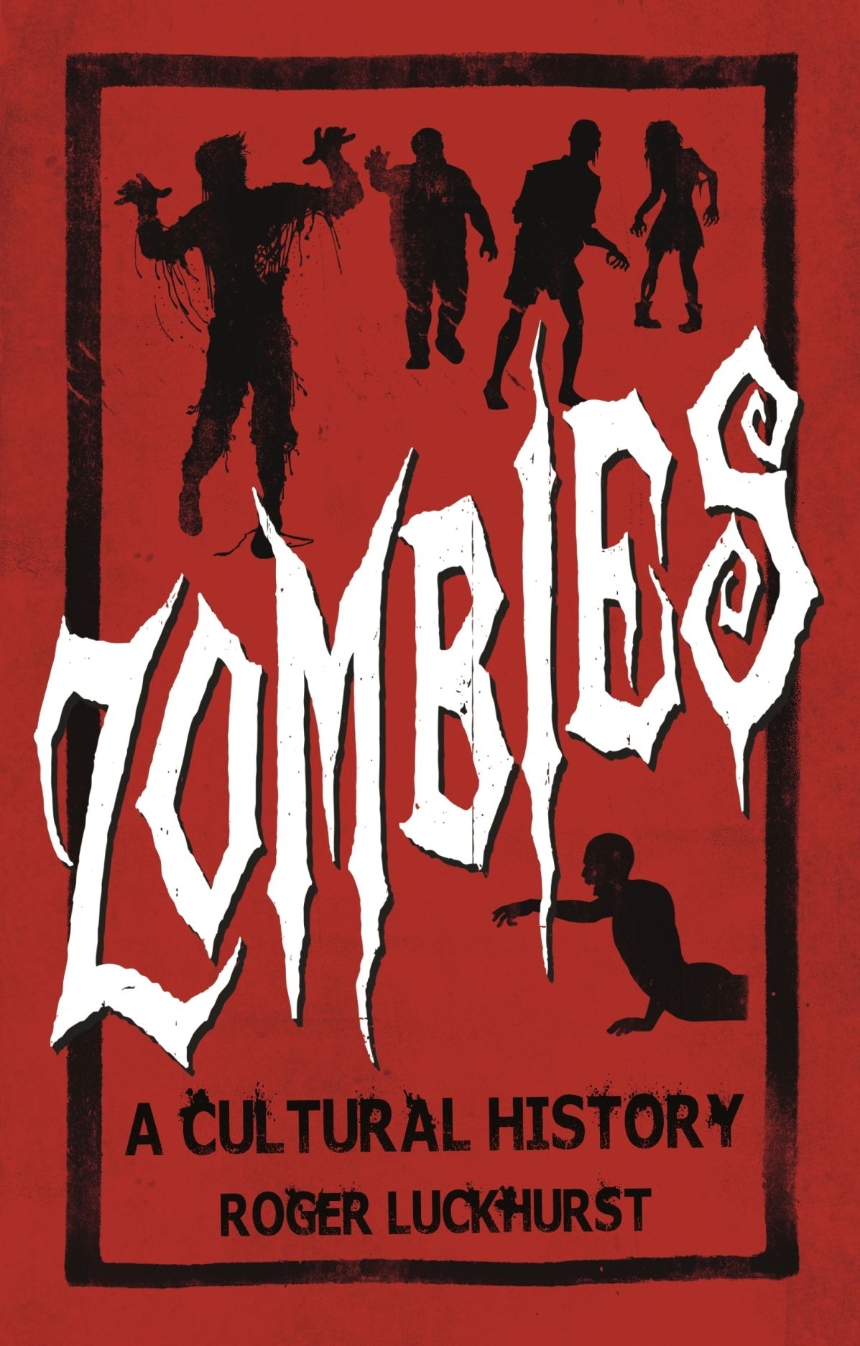
Haiti: Capitalism, colonialism, and zombies. Reading notes on

Zombies: A Cultural History by Roger Luckhurst


Reading notes on

Zombies: A Cultural History by Roger Luckhurst (Reaktion Books, 2015)


2 Phantom Haiti


....This longer historical perspective on Haiti in the Western imagination offers the broader context for now concentrating on the crucial years in which the Caribbean zombi translated and transformed into the zombie in American culture.


.... Under slavery, Vodou operated secretly in defiance of the Code Noir. But even after independence, the ruling elite in Port-au-Prince tended to regard Vodou practices as a peasant superstition that blocked progress and development towards modern statehood, adopting a European Enlightenment model of the nation. It was only in the 1920s that leftist political intellectuals like the anthropologist Jean Price-Mars suggested that Vodou could form the basis of a new indigenous national identity in Haiti. Most anti-colonial thinkers – like Fanon – continued to regard superstitious belief as a regressive force, a marker of subjection, not liberation.

    Secret and disavowed before and after independence, Vodou steadily acquired a monstrous and phantasmal status in nineteenth-century travel writing. Vaudoux was an elusive cult mentioned only marginally before 1850 (and not at all in Thomas Madiou's four-volume history of the republic, published in 1848).3 Yet it started to be the defining element of the Haitian republic in the 1850s, when the politics of race and slavery became incendiary during the American Civil War. In this context, an independent black state only a little bit further away than the American slave states in the South required ideological demonization by the enemies of abolition. Black autonomy had to indicate depravity and credulity. When the ex-slave and soldier Faustin Soulouque became president of Haiti in 1847 and ruled as Emperor Faustin I between 1849 and 1859, Haiti was portrayed as returning to a savage African state of bestial cruelty and superstition. It was emphasized that Soulouque was a 'pure' black African who had massacred the mulatto ruling elite in Port-au-Prince on coming to power, eliminating the last traces of white influence. The scientific racism of Count Gobineau's notorious Essay on the Inequality of the Human Races (1853–5) used Haiti as the exemplar of race degeneration. A lurid depiction of this savage state, Soulouque and His Empire, was published by Gustave d'Alaux in French in 1856 and translated into English in 1861. Towards the end of the American Civil War, there was also propagandistic use of the Bizoton Affair, a trial in a place near Port-au-Prince that appeared definitively to link Vaudoux with human sacrifice and cannibalism, the basest marker of savagery imaginable in Western thought. This was hugely important in further darkening the reputation of Haiti.

    A detailed account of the Bizoton trial was published in English in Spenser St John's Hayti; or, The Black Republic in 1884, some twenty years after the fact, suggesting the story still carried a lot of cultural freight. St John was a career diplomat who had served as the British consul in Haiti from 1863 to 1875. Although when in the Far East he had scandalized his fellow colonial rulers by openly acknowledging his three children with his Malay mistress, his disdain for black Haitians was absolute. In his chapter 'Vaudoux Worship and Cannibalism', St John suggests that the arrival of Soulouque made Vaudoux effectively the official religion of the rulers of the republic, and that this dark alliance was continued by Soulouque's successors after he was deposed. St John detailed rituals that included 'the adoration of the snake', sacrifices of animals and the 'goat without horns' (which St John understands as meaning the sacrifice of human children). The ceremony of the snake, St John asserts, using second- and third-hand accounts, 'is accompanied by everything horrible which delirium could imagine to render it more imposing',4 a formulation that has no content but positively invites the reader to fantasize horrific things.

    The Bizoton trial develops directly from these stories; the record of the law is again supposed to provide objective truth value of an horrific tale. In December 1863, the court heard, the labourer Congo Pellé had sought intercession from a Vaudoux papaloi, who had demanded a human sacrifice. Congo's niece was delivered; she was strangled, decapitated, her head cooked for soup and her flesh for a stew, with some body parts eaten raw, participants later confessed in court. The disappearance of another child in the area for a second sacrificial ritual had exposed the horrific plot.

    St John is contemptuous of the process of the court (modelled on the French, not British, system), where the fatal confession had obviously been beaten out of the defendants and testimony was whispered to the judge by those too terrified to attest in open court. Yet he points out with dogged empiricism that 'there, on the table before the judge, was the skull of the murdered girl, and in the jar the remains of the soup and the calcined bones.'5 Eight members of the honfort were condemned to death, and St John's account contains an intriguing last detail:

The Vaudoux priests gave out that although the deity would permit the execution, he would only do it to prove to his votaries his power by raising them all again from the dead. To prevent their bodies being carried away during the night (they had been buried near the place of execution), picquets of troops were placed round the spot; but in the morning three of the graves were found empty and the body of the two priests and the priestess had disappeared.6    Presumably, if the word had been available to him, St John would have said something about the zombi at this point, but his account never uses the term. St John rationally dismisses the story as an act of collusion with the gendarmerie, a further indication of how sunk in superstition Haiti has become. A few pages later, however, St John quotes from an official French report of 1867 about a disturbed grave and the occupant found 'killed' a second time, stabbed through the heart. The report hints at 'a sleeping potion' used to place victims in a drugged state that doctors mistake for death. After the funeral, the bodies are disinterred, killed and their body parts used in rituals. St John picks up the phrase li gagné chagrin, local Kreyòl for 'a sort of anaemia of the mind' that is affected by this drug. This is tantalizing, but St John offers no further details.7


....This paranoid vision of savage Haiti as a den of conniving cannibals was reproduced wholesale during the American occupation. Richard Loederer's Voodoo Fire in Haiti, for instance, published in New York in 1935, is breathless about 'secret cults, black magic, and human sacrifices'. These have been woven into the thread of the black republic from the beginning, Loederer claims, explaining that 'from out of these sexual orgies grew the atavistic impulse towards cannibalism.'24 A native informant has told him the story of the Bizoton Affair, now sensationally retitled 'the "Congo Bean Stew" trial'. This material is clearly just lifted from St John's 50-year-old book. Another invented informant is given the words of William Seabrook, which shows how quickly the older cannibal fantasy started to incorporate zombies in the 1930s where they had been entirely absent before: 'Voodoo is strong; stronger even than death. The Papaloi can raise the dead. He breathes life into corpses who get up and behave like men. These creatures are bound forever to their master's will. They are called "zombies."'25 From very early on in America's engagement, the depiction of Haiti is largely a palimpsest of recycled textual fantasy.

    Another example of this American view was John Houston Craige, a U.S. Marine who was transferred to train the Haitian police force for three years and published Cannibal Cousins in 1935. Rebellion and Vodou are as usual tied together in Craige's sketch of the republic, and Vodou is routinely associated with cannibalism from the earliest days of independence. Craige records a general disbelief of these stories among American Marines, but cites the legal case against Papa Cadeus, who had been an important figure in the Cacos Rebellion against the American occupiers, and a Vodou papaloi long rumoured to use cannibalistic rituals involving the 'Goat without Horns'. Craige reports (second hand) that human bones had been found buried around the Cadeus honfort, and that the priest had been sentenced to death by the court in the early 1920s, a judgement foolishly commuted at a time when the Americans were under scrutiny for their own alleged atrocities. In a later chapter titled 'Doctor Faustus, Cannibal', Craige charts the 'marvellous tale' of a lowly black peasant from Marbeuf who rises to become the chief of police in Port-au-Prince by virtue of his deal with a Vodou priest.26 It is said, Craige reports, that his rise came at the cost of the sacrifice of one baby a year for over 40 years. This is recirculated gossip: a patina of savagery rubs off, and even if untrue it serves to abject Haitians as credulous fools for believing such a story. It also deflected any critical attention from the organized political and guerrilla opposition to the occupation.27

    This demonization continued long into the post-occupation era, particularly under the dictatorship of François 'Papa Doc' Duvalier (who came to power in 1957), in part because this brutal regime carefully cultivated fear and obedience among the population by associating Duvalier with Vodou and occult secret societies. Duvalier, who trained in medicine, was closely associated with the scholar of Vodou Lorimer Denis and they co-wrote the study The Gradual Evolution of Vodou. In the 1960s, when gruesome news of Duvalier's atrocities began to circulate (helpful material in an era of violent anti-colonial wars against Western powers), the details mixed atrocity, Vodou and supernatural doings in the presidential palace. After a failed rebellion in 1963, Duvalier was alleged to have ordered the leader's 'head to be cut off, packed in ice and brought to the palace in an Air Force plane. News spread around Port au Prince that Papa Doc was having long sessions with the head; that he had induced it to disclose the exiles' plans.'28 Through stories of sorcery, Duvalier became associated with the Guédé lwa, the Vodou spirits who preside over death and the cemetery, and he deliberately dressed to echo the signature style of Baron Samedi in a black hat, dark glasses and funeral suit: a figure to preside over a funeral. In an odd feedback loop, Duvalier survived by exploiting American fantasies of Haitian cannibalism and supernaturalism, reimporting them to terrorize his own population....


     In the 1980s, cannibalistic fantasies specifically about Haiti returned again, this time with catastrophic humanitarian consequences. In the very early years of the AIDS pandemic, it was a common speculation that the syndrome was invading American shores through African or Caribbean carriers. Signs of the syndrome were particularly rife in the immigrant Haitian population in New York. In 1982, AIDS was considered 'an epidemic Haitian virus' and a year later the association with 'Voodoo practices' was first made.32 In 1986, the august Journal of the American Medical Association published a letter from a doctor voicing the hypothesis that those attending Vodou rituals 'may be unsuspectingly infected with AIDS by ingestion, inhalation or dermal contact with contaminated ritual substances, as well as by sexual activity', citing Wade Davis as the sole authority. The journal titled the contribution 'Night of the Living Dead II'.33 The drinking of blood invoked four centuries of an association with the eating of flesh, cannibalism and magic. The high incidence of AIDS among Haitians, one reporter declared, was 'a clue from the grave, as though a zombie, leaving a trail of unwinding gauze bandages and rotting flesh' had appeared at the doors of the hospital.34 There was no recognition that it was sexual tourism between America and the Caribbean that was the most obvious source of infection.

    For the historian Laënnec Hurbon, Haiti and its Vodou practices have long been sites of American projection, places where travellers 'find in Vodou their own fantasies'.35 It is generally agreed that while ritual anthropophagy (the eating of human flesh) can occur in highly ritualized circumstances, the 'cannibal' is an invention of colonial discourse. What testimonies of Vodou rituals involving the eating of flesh are most likely to be are literalizations of highly metaphorical practices. Vodou is, after all, a practice of possession and dispossession, of roles and masks, where one thing stands in for or displaces another and the metaphysical transposition of identities is at the core of events (just as the transubstantiation of the 'body of Christ' is at the heart of Christian ritual). In a discussion of the Kreyòl term mangé moun ('eating man'), Erika Bourguignon noted its extremely flexible metaphorical range in Haiti, where greed and envy, domination and control were translated into talk of oral aggression or acts of devouring, and the metaphorical transpositions of animal and human flesh.36 Deftness in both language and ritual practice outwits leaden visitors, particularly if they filter what is witnessed through a pre-prepared grid of interpretations about 'savages', witch-doctors or cannibals....

Haiti: Capitalism, colonialism, and zombies

Reading notes:


Zombies: A Cultural History by Roger Luckhurst (Reaktion Books, 2015)


Introduction


....The zombies do not do the cultural work of monstrous others, slimy tentacular aliens or ancient cephalopodic gods raised from the deep. Instead, they are simply us reflected back, depersonalized, flat-lined by the alienating tedium of modern existence. They are the pressing problem of the modern world's sheer number of people, the population explosion, bodies crammed into super-cities and suburban sprawls, demanding satiation beyond any plan for sustainable living. Survival horror is the crisis of the last representatives of rugged Western individualism trying to wrest themselves from the unregarded life of the anonymized mass.

     It is then a short step to reading the zombie as the symbolic figure for contemporary capitalism. The zombie is 'the official monster of the recession', a relatively new addition to 'the capitalist grotesque', one shouty Marxist tome declares. 'What is striking about capitalist monstrosity', David McNally continues, 'is its elusive everydayness.'4 Karl Marx didn't have the zombie metaphor to hand, but he did sometimes write of capital as vampiric, sucking dead labour from living bodies. Now that contemporary capitalism has become both massively more extensive (reaching around the globe) and intensive (penetrating and commodifying body and mind), this seems to make the zombie horde the privileged emblem of globalized hyper-capitalism, a runaway world always on the brink of apocalypse. Zombiedom as contagion, as sparking off exponential viral vectors through the communication networks of the global village, is only another figure for representing the risky interconnection of the world's economy. The zombie is the Gothic version of the catastrophe that haunts what sociologists call 'the risk society'. 'The deepest pleasure of the zombie story', another radical critic declares,


"lies always in its depiction of the break, that exhilarating moment of long hoped-for upheaval: the fulfilment of a sometimes avowed, sometimes disavowed, desire to see power at last unmade, laid finally to waste and torn limb from limb – and our structures of dominion and domination replaced finally and forever with Utopia, if only for the already dead."


....while there is a familiar history of the emergence of the zombie, this needs to be situated in a host of other cross-currents. The zombie is in fact one of the most unstable figures in the panoply of the undead, and has never stayed fixed for long. This is not surprising when you realize that 'zombie' is a word that emerges from the grim transports of populations between Africa, Europe and the plantations of the Caribbean and the American South. The word originates from a belief system that is a product of the slave trade plied between Africa, Europe and the Americas from the sixteenth century onwards. The zombie is rarely stable because it is a syncretic object, a product of interaction, of translation and mistranslation between cultures. Possible African linguistic candidates for the origin of the world includendzumbi ('corpse' in the Mitsogo language of Gabon), nzambi ('spirit of dead person' in the Kongo language of the Congo) and zumbi (a fetish or ghost in the Kikongo and Bonda languages). In the Caribbean, speculations on the origins of zombi include sources in Arawak (zemi means spirit) or even a Kreyòl derivation from the French les ombres. It also bears some relationship to the words 'jumbee' and 'duppy', more familiar from Jamaican folklore as umbrella terms for a wide array of ghosts, spirits and changelings. The passage of the French Caribbean zombi to the North American pulp fiction zombie in the 1920s and '30s is also a complicated but crucial story to tell.9 The American zombie is a mistranslation and weird creative elaboration of the Caribbean zombi, yet all the time it keeps an undertow of violent colonial history in plain sight.

     The zombie, in other words, is a product of what has been called 'the circum-Atlantic world': 'Bounded by Europe, Africa, and the Americas, North and South, this economic and cultural system entailed vast movements of people and commodities to experimental destinations.' This created what the theatre historian Joseph Roach terms 'an oceanic interculture' marked by the hybridization of peoples and beliefs.10 It also creates a poétique de la relation, a cross-cultural poetics.11 A crucial part of the story, then, is that the zombie is a result of the Black Atlantic, 'a webbed network, between the local and the global', a dynamic interaction of far-flung points on the map, brought into contact through centuries of maritime trade and colonization that produces unpredictable forms of cultural mixing or métissage.12 The meaning of the zombie changes radically from point to point, time to time, twisting and turning, constantly subverting, reverting and inverting itself, sometimes a positive belief held in a magical or theological frame, just as often a negative projection of primitive superstition onto others.

     If the zombie emerges in the slippage between cultures, all the same this is not a preface to celebrating the zombie as some kind of sliding signifier that can mean anything we want it to mean. Wherever it comes to stop, the zombie is still branded by the murderous history of slavery and colonial dispossession that underpins its origins. It remains connected to the meaning of Haiti and the islands of the Antilles to the modern world, and the systematic violence, expropriated labour, rebellion and revolution in those areas, however far it travels. What is complex about the figure is often the way this atrocious undertow is at once avowed and disavowed as the zombie stumbles through very different cultures.


*     *     *


1 From Zombi to Zombie: Lafcadio Hearn and William Seabrook


....Seabrook was immersed in that strand of Modernism that expressed its disgust of bourgeois civilization after the Great War by embracing what it perceived as the 'savage' vitality of the 'primitive' black world as an answer to Western decadence and decay. This 'negrophilia' stretched from Picasso's famous use of African masks in his seminal painting Les Demoiselles d'Avignon (1907) after visiting the ethnographic display in the Musée d'Ethnographie du Trocadéro, to the craze around La Revue nègre in Paris in 1925, which made a star of the near-naked black dancer Josephine Baker. Paris in the 1920s was a city 'in the grip of a virus noir'.16 Michel Leiris delighted in another African American revue, Black Birds, declaring that it shattered the polite tedium of bourgeois art by reconnecting with 'our primitive ancestry', and exclaimed that the show was the perfect exemplum of 'why we have so little esteem left for anything that doesn't wipe out the succession of centuries in one stroke and put us, stripped of everything, naked, in a more immediate and newer world'.17 Seabrook was the same: he wished to 'escape modernity through initiation into blackness'.18


....Seabrook travelled the world in search of the wild savagery that would shake the prison of his white identity. Most often, though, he found this in the bottom of a bottle, and he wrote a remarkable memoir of his treatment for alcoholism, Asylum.


....It is only in later chapters [of The Magic Island, 1924] that Seabrook provides any proper context for his visit, when he travels to the island of La Gonave to meet its famous 'White King'. Faustin Wirkus was the American Marine Corps sergeant promoted to effective governor of this island in the Gulf of Gonave, 30 miles from Port-au-Prince. Wirkus 'ruled' this territory as the lone white American representative on the island. After Seabrook's visit, Wirkus became something of a celebrity in America, published his own memoirs and went on the lecture circuit with his 'exotic' films of Haitian life. Seabrook praises the Marine for weaving himself into peasant structures of belief and justice, rather than trying to impose foreign values: this is how Wirkus is crowned 'King', symbolic companion to the native Queen.

    The key point is that in visiting Wirkus, Seabrook's travelogue finally acknowledges that his whole trip is made possible by the occupation of Haiti by American forces in the period between 1915 and 1934. His impressions of Haiti are entirely dictated by this act of colonization, and this context is central to understanding how the Caribbean zombi made the leap to become the American zombie.

    The occupation of Haiti was part of a larger series of American interventions in the Pacific and Caribbean in the early stages of America's imperial expansion into its sphere of influence from the 1890s: the annexation of Puerto Rico in 1898, the occupation of Cuba and Honduras, the creation of Panama, the troops sent into Mexico in 1914. Haiti occupied a unique position in the Caribbean in that it had been an independent republic since 1804, changing its name from Saint-Domingue to the indigenous Arawak name Haiti. It was the only state to be built from a successful slave rebellion at that time. This revolt began in 1791, started by a group of 'Black Jacobins' inspired by the rhetoric of universal liberty promised by the French Revolution; it had to defeat French, Spanish and English troops and a last Napoleonic attempt at reinvading the island before winning final independence.

    Saint-Domingue had been the most profitable colony in the French empire, pouring vast wealth into French port cities like Brittany and Marseilles from rich harvests of sugar and coffee. The wealth of a substantial portion of the French bourgeoisie depended on the output of this single colony. Its profits were so vast because the plantations exercised a brutal system of slavery that slaughtered hundreds of thousands of African slaves throughout the eighteenth century in the relentless pursuit of maximum return. The infamous newly independent black republic wrote a constitution outlawing foreign ownership of land. For this and other outrages, Haiti was demonized in white Europe and America for a century as an affront to benign accounts of the civilizing virtues of imperialism. The fledgling post-colonial state was virtually crippled from birth by the huge reparations of 150 million francs it was forced to pay in 1825 to foreign plantation owners for loss of income in return for limited trading deals. Haiti has been in debt dependency ever since.

    In July 1915, the U.S. intervened in Haiti, ostensibly to restore political stability and avoid civil war following the murder of the president Guillaume Sam, who had been torn apart by his own citizens. The Americans depicted themselves in paternalist terms, and Haiti as its savage, childish 'ward' requiring benevolent guidance. American capitalists had actually been steadily securing control of Haiti's Banque Nationale over the previous decade, and the finances of the country had effectively been taken over by the New York City Bank before the U.S. Navy arrived. Haiti was again a pioneer, this time in experiencing the neo-imperialism of global finance at the start of the twentieth century.

    American diplomats installed a new puppet president and forced the passage of a constitution which allowed for foreign ownership of land again. Much of the constitution was drafted by Assistant Secretary to the Navy Franklin D. Roosevelt. A $40 million loan secured from New York banks in 1919 further indebted Haiti. American capital then set about reconstituting large plantations. New business ventures, such as HASCO, were investment opportunities that promised large returns to their investors. Improvements in the infrastructure of the immiserated state of Haiti were funded by heavy taxes; most Haitians could not pay in cash and were forced to do so through the supply of their indentured labour. The return of the corvée gang within a year of American occupation, working on roads and railroads, was seen by many as the return of slavery.

    The Americans fought a long-term insurrection by guerrilla rebels (known as cacos) and also, alongside the Catholic Church and Protestant missionaries, a war against 'native superstition', which involved attempts to systematically dismantle any Vodou religious worship among the peasantry. This resulted only in a black-market trade in 'Voodoo drums' seized from honforts (ceremonial spaces) destroyed in police and army raids. In 1920, allegations about atrocities allegedly committed by Marines, reported by the black American journalist James Weldon Johnson in The Nation, resulted in an American Senate Committee inquiry that undermined the discourse of paternalism. Haiti became a political focus for black civil rights and Negritude movements across the interwar period. By 1922, HASCO was in financial collapse and had to be recapitalized. During this slump, tens of thousands of Haitians travelled to neighbouring Dominica; up to 25,000 of them were later slaughtered in the ethnic massacres of 1937 known as El Corte, 'the cutting', thousands of macheted bodies of Haitian workers flung into the Massacre River. There was also mass migration to find work in Cuba, some estimating that nearly a quarter of the male population moved in this period. A shift in American foreign policy after the election of 1933 ensured the end of the occupation in the context of non-intervention. The U.S. withdrew from Haiti on 15 August 1934.

    Seabrook's visit came towards the end of the occupation, at a time when the euphemistically named 'Hygiene Service' of the occupier was engaged in yet another major drive to disrupt an insurgency they closely associated with Vodou worship. They were being assisted by a very active Catholic Church campaign against peasant beliefs. The weirder and more sunk in superstition savage Haiti was, the more the language of Empire and Church as bringers of enlightenment justified intervention. Seabrook's Modernist primitivism clearly disliked any pious Christian interference with savage energies (his rejection of Christianity was wrapped up in his rejection of his father's evangelical ministry). This is why he approved of the king of Gonave's decision to merge with local customs rather than try to eradicate them, and why he embraced with typical colonial melancholy what he believed were the last traces of authentic rituals and customs before modernity swept them away.

    But Seabrook was also blind to the conditions that created his 'dead men working in the cane fields'. The cultural resistance to slave plantations, from a century of building nationalist myths commemorating the violent refusal of the white masters, meant that the large HASCO plant in Cul-de-Sac found it very difficult to find labour for its revival of large-scale harvesting. Gang bosses brought in outsiders under duress; they were referred to locally as zombis. If slavery is, as Orlando Patterson has evocatively put it, a form of social death, to be returned to slavery by the American occupiers was an uncanny return after a century of freedom: no wonder the 'undead' roamed the HASCO fields. 'The essence of slavery is that the slave, in his social death, lives on the margin between community and chaos, life and death, the sacred and the secular. Already dead, he lives outside the mana of the gods and can cross the boundaries with social and supernatural impunity.'33 So the imbecilic state Seabrook diagnosed could just as well have been the exhaustion of corvée work, and the shuffling gait might have come either from being in chains or from a distinctive way of moving that slaves developed to conserve energy. There is a reason why so many African American dances are based around ideas of 'the shuffle'. What Seabrook thinks he sees as a savage survival is actually a product of the very industrial modernity he believes he is leaving behind. 'Could there have been a more fitting image of and inclusive commentary on the proletarianization of the displaced Haitian peasant sharecropper than a crew of zombies toiling in the HASCO cane fields?' one historian asks.34


....The Haitian zombi has accrued a much more fixed set of cultural identifications and meanings. As my reading of William Seabrook's The Magic Island has begun to suggest, this is down to the very specific role that the black republic of Haiti has played in the colonial imagination of Europe and America since independence in 1804.

     Seabrook's sensational story of the zombie needs to be understood as the story of a creature emerging from a long history of demonization of Haiti, which was focused for decades on overheated fantasies of Voodoo, cannibalism and black magic. Once this sense of historical undertow is in place, we can begin to place Seabrook as merely one voice in the cacophony that unleashed the zombies that poured into American popular culture in the last years of the colonial occupation in the late 1920s and early 1930s.


*     *     *


Imperialist scorn, Cuban solidarity on display after earthquake in Haiti – The Militant

Imperialist scorn, Cuban solidarity on display after earthquake in Haiti

BY SETH GALINSKY
September 6, 2021
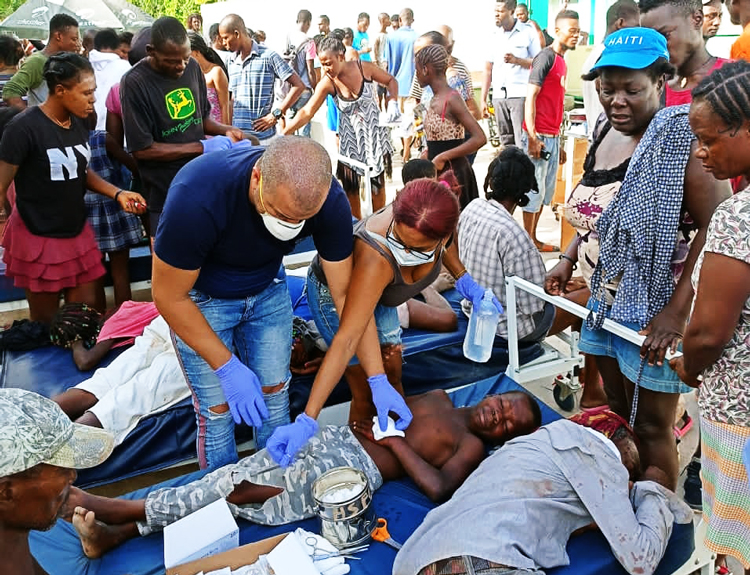
Volunteer Cuban health workers treat earthquake victims, other patients outside hospital in Corail, Haiti, Aug. 24. Cuban internationalists have worked continuously in Haiti for 22 years.
BRIGADA MÉDICA CUBANA EN HAITÍVolunteer Cuban health workers treat earthquake victims, other patients outside hospital in Corail, Haiti, Aug. 24. Cuban internationalists have worked continuously in Haiti for 22 years.

With more than 2,100 dead, over 12,000 injured and an estimated 136,000 families left homeless after an Aug. 14 earthquake that ravaged southwest Haiti, the trickle of international aid is nowhere near what is needed.

Just like in previous disasters there — including the 2010 earthquake that left about 300,000 dead and Hurricane Matthew in 2016 — the grossly inadequate aid shows that working people in Haiti don’t count for much in the eyes of the capitalist rulers in Washington and other imperialist powers. Despite the death toll from previous disasters, Washington and the succession of Haitian governments it has dominated haven’t improved the utterly inadequate health care available on the island.

The sharp exception is the internationalist aid from revolutionary Cuba, whose medical workers have provided care and health education in Haiti continuously since 1998, when it sent 350 volunteers in the wake of Hurricanes George and Mitch. To combat the spread of cholera introduced in Haiti by U.N. troops in 2010, the Cuban health care workers went house to house in the most isolated mountain regions, educating people about the necessary measures to prevent the spread of the disease.

Among thousands of Cuban medical volunteers providing health care all over the world, there are currently 253 doctors, nurses and other medical workers in Haiti, who will remain there as long as they are needed. This is a significant contribution in a country where there are at best 2,500 doctors, most in private practice and concentrated in wealthier neighborhoods.

Cuban internationalist medical workers already in the hardest hit earthquake zone began setting up makeshift hospitals and operating rooms. At the same time, they continue treating and aiding people across the country. Some of the volunteers are “sleeping in tents, like the more than 130,000 families who lost everything on Aug. 14,” reported Trabajadores, the weekly newspaper of the Central Organization of Cuban Workers.

For the last 22 years, these medical volunteers have collaborated closely with their Haitian colleagues and working people, including giving classes in the health centers and individual homes to raise consciousness about preventive medicine and sanitation.

Proud of Cuba’s socialist revolution

While the Cuban volunteers are scrupulous about not interfering in the internal politics in Haiti, they are proud of representing their socialist revolution.

We are “showing in practice the values of solidarity and humanism that the heroic guerrilla Ernesto Che Guevara has bequeathed to us,” reads a post on the Facebook page of Cuba’s mission in Haiti. Guevara was part of the Marxist leadership in Cuba that led workers and farmers to take power and subsequently served on internationalist missions to Congo and Bolivia.

The U.S. rulers and other opponents of the Cuban Revolution have been trying to stir up divisions in Cuba over the challenge the revolution faces in the midst of the COVID-19 pandemic and the tightening of the U.S. embargo. It’s a struggle for Cuba to get raw materials and syringes it needs to produce and administer its own vaccines.

Despite these obstacles, the Cuban government reported Aug. 24 it has now obtained supplies needed to inoculate everyone on the island and expects to have done so by the end of November.

“You are keeping medical brigades in other countries, as if there were doctors and medicine to spare” in Cuba, complained the editors of CiberCuba, a Spanish-based website, Aug. 23. “Everything is for propaganda, isn’t it?”

These counterrevolutionaries, who defend the dog-eat-dog morality of the capitalist market, are incapable of understanding that such solidarity is not “for propaganda,” but is in fact a product of working-class values that are the bedrock of a living socialist revolution. “We don’t offer what we have left over,” Cuban volunteers often explain. “We share what we have.”

What a difference from the so-called nonprofits, nongovernmental agencies and private companies that use the disaster in Haiti ostensibly to provide aid, but in fact to legitimize their operations and line their own pockets.

Working-class solidarity

In addition to the aid from the Cubans, workers and farmers in Haiti have turned to each other’s solidarity to get through the current crisis. “I have a friend who came from Port-au-Prince to bring me water and food and I shared that with my neighbors,” Marcel Francois told the press.

Dominican journalist Deisy Toussaint, who traveled by land from Port-au-Prince to Les Cayes, told channel 24 TV that she saw areas with homes totally destroyed, where five days after the quake no aid or rescue crews had arrived. “People told us they could hear people still alive under the rubble, and all they had were their hands to try to get them out.”

In the absence of any serious government response to the disaster, a handful of recent graduates from Haiti’s public medical school pooled their money for supplies and set up a clinic in Marceline.

More than 100 years of U.S. imperialist domination and superexploitation are perpetuating the miserable conditions working people confront in Haiti, ensuring natural disasters rapidly become social catastrophes.


Imperialist scorn, Cuban solidarity on display after earthquake in Haiti – The Militant

Earthquake, decades of US plunder brings social catastrophe in Haiti – The Militant

Earthquake, decades of US plunder brings social catastrophe in Haiti – The Militant

Monday, April 12, 2010

Cuba and Haiti

Cuban Medical Aid to Haiti: One of the World’s Best Kept Secrets

by Emily J. Kirk and John M. Kirk
Media coverage of Cuban medical cooperation following the disastrous recent earthquake in Haiti was sparse indeed. International news reports usually described the Dominican Republic as being the first to provide assistance, while Fox News sang the praises of U.S. relief efforts in a report entitled “U.S. Spearheads Global Response to Haiti Earthquake” — a common theme of its extensive coverage. CNN also broadcast hundreds of reports, and in fact one focused on a Cuban doctor wearing a T-shirt with a large image of Che Guevara — and yet described him as a “Spanish doctor”.

In general, international news reports ignored Cuba’s efforts. By March 24, CNN for example, had 601 reports on their news website regarding the earthquake in Haiti — of which only 18 (briefly) referenced Cuban assistance. Similarly, between them the New York Times and the Washington Post had 750 posts regarding the earthquake and relief efforts, though not a single one discusses in any detail any Cuban support. In reality, however, Cuba’s medical role had been extremely important— and had been present since 1998.

Cuba and Haiti Pre-Earthquake

In 1998, Haiti was struck by Hurricane Georges. The hurricane caused 230 deaths, destroyed 80% of the crops, and left 167,000 people homeless.[1] Despite the fact that Cuba and Haiti had not had diplomatic relations in over 36 years, Cuba immediately offered a multifaceted agreement to assist them, of which the most important was medical cooperation.

Cuba adopted a two-pronged public health approach to help Haiti. First, it agreed to maintain hundreds of doctors in the country for as long as necessary, working wherever they were posted by the Haitian government. This was particularly significant as Haiti’s health care system was easily the worst in the Americas, with life expectancy of only 54 years in 1990 and one out of every 5 adult deaths due to AIDS, while 12.1% of children died from preventable intestinal infectious diseases.[2]

In addition Cuba agreed to train Haitian doctors in Cuba, providing that they would later return and take the places of the Cuban doctors (a process of “brain gain” rather than “brain drain”). Significantly, the students were selected from non-traditional backgrounds, and were mainly poor. It was thought that, because of their socio-economic background, they fully understood their country’s need for medical personnel, and would return to work where they were needed. The first cohort of students began studying in May, 1999 at the Latin American School of Medicine (ELAM).

By 2007, significant change had already been achieved throughout the country. It is worth noting that Cuban medical personnel were estimated to be caring for 75% of the population.[3] Studies by the Pan American Health Organization (PAHO) indicated clear improvements in the health profile since this extensive Cuban medical cooperation began.

Improvements in Public Health in Haiti, 1999-2007[4]

Health Indicator 1999
2007
Infant Mortality, per 1,000 live births
80 33
Child Mortality Under 5 per 1,000
135 59.4
Maternal Mortality per 100,000 live births
523 285
Life Expectancy (years) 54 61

Cuban medical personnel had clearly made a major difference to the national health profile since 1998, largely because of their proactive role in preventive medicine-as can be seen below.

Selected Statistics on Cuban Medical Cooperation, Dec. 1998-May 2007[5]

Visits to the doctor 10,682,124
Doctor visits to patients 4,150,631
Attended births 86,633
Major and minor surgeries 160,283
Vaccinations 899,829
Lives saved (emergency) 210,852

By 2010, at no cost to medical students, Cuba had trained some 550 Haitian doctors, and is at present training a further 567. Moreover, since 1998 some 6,094 Cuban medical personnel have worked in Haiti. They had given over 14.6 million consultations, carried out 207,000 surgical operations, including 45,000 vision restoration operations through their Operation Miracle programme, attended 103,000 births, and taught literacy to 165,000. In fact at the time of the earthquake there were 344 Cuban medical personnel there. All of this medical cooperation, it must be remembered, was provided over an 11-year period before the earthquake of January 12, 2010.[6]

Cuba and Haiti Post-Earthquake

The earthquake killed at least 220,000, injured 300,000 and left 1.5 million homeless.[7] Haitian PrimeMinister Jean-Max Bellerive described it as “the worst catastrophe that has occurred in Haiti in two centuries”.[8]

International aid began flooding in. It is important to note the type of medical aid provided by some major international players. Médecins Sans Frontières (MSF), for example, an organization known for its international medical assistance, flew in some 348 international staff, in addition to the 3,060 national staff it already employed. By March 12 they had treated some 54,000 patients, and completed 3,700 surgical operations.[9]

Canada’s contribution included the deployment of 2,046 Canadian Forces personnel, including 200 DART personnel. The DART (Disaster Assistance Response Team) received the most media attention, as it conducted 21,000 consultations-though it should be noted they do not treat any serious trauma patients or provide surgical care. Indeed, among the DART personnel, only 45 are medical staff, with others being involved in water purification, security, and reconstruction. In total, the Canadians stayed for only 7 weeks.[10]

The United States government, which received extensive positive media attention, sent the USNS “Comfort”, a 1,000-bed hospital ship with a 550-person medical staff and stayed for 7 weeks, in which time they treated 871 patients, performing 843 surgical operations.[11] Both the Canadian and US contributions were important-while they were there.

Lost in the media shuffle was the fact that, for the first 72 hours following the earthquake, Cuban doctors were in fact the main medical support for the country. Within the first 24 hours, they had completed 1,000 emergency surgeries, turned their living quarters into clinics, and were running the only medical centers in the country, including 5 comprehensive diagnostic centers (small hospitals) which they had previously built. In addition another 5 in various stages of construction were also used, and they turned their ophthalmology center into a field hospital-which treated 605 patients within the first 12 hours following the earthquake.[12]

Cuba soon became responsible for some 1,500 medical personnel in Haiti. Of those, some 344 doctors were already working in Haiti, while over 350 members of the “Henry Reeve” Emergency Response Medical Brigade were sent by Cuba following the earthquake. In addition, 546 graduates of ELAM from a variety of countries, and 184 5th and 6th year Haitian ELAM students joined, as did a number of Venezuelan medical personnel. In the final analysis, they were working throughout Haiti in 20 rehabilitation centers and 20 hospitals, running 15 operating theatres, and had vaccinated 400,000. With reason Fidel Castro stated, “we send doctors, not soldiers”.[13]

A glance at the medical role of the various key players is instructive.

Comparative Medical Contributions in Haiti by March 23 [14]


MSF Canada USA
Cuba
No. of Staff 3,408 45 550 1,504
No. of Patients Treated 54,000 21,000 871 227,143
No. of Surgeries 3,700 0 843 6,499

These comparative data, compiled from several sources, are particularly telling as they indicate the significant (and widely ignored) medical contribution of the Cubans. In fact, they have treated 4.2 times the number of patients compared with MSF (which has over twice as many workers, as well as significantly more financial resources), and 10.8 times more than the Canadian DART team. (As noted, Canadian and US medical personnel had left by March 9). Also notable is the fact that the Cuban medical contingent was roughly three times the size of the American staff, although they treated 260.7 times more patients than U.S. medical personnel. Clearly, there have been significant differences in the nature of medical assistance provided.

It is also important to note that approximately one-half of the Cuban medical staff was working outside the capital, Port-au-Prince, where there was significant damage as well. Many medical missions could not get there, however, due to transportation issues. Significantly, the Cuban medical brigade also worked to minimize epidemics by making up 30 teams to educate communities on how to properly dispose of waste, as well as how to minimize public health risks. Noted Cuban artist Kcho also headed a cultural brigade made up of clowns, magicians and dancers, supported by psychologists and psychiatrists, to deal with the trauma experienced by Haitian children.

Perhaps most impressively, following the growing concern for the health of the country, due to a poor and now largely destroyed health care system Cuba, working with ALBA (the Alianza Bolivariana para los Pueblos de Nuestra América) countries, presented to the WHO an integral program to reconstruct the health care system of Haiti. Essentially, they are offering to rebuild the entire health care system. It will be supported by ALBA and Brazil, and run by Cubans and Cuban-trained medical staff. This is to include hospitals, polyclinics, and medical schools. In addition, the Cuban government has offered to increase the number of Haitian students attending medical school in Cuba. This offer of medical cooperation represents an enormous degree of support for Haiti.[15] Sadly, this generous offer has not been reported by international media.

While North American media might have ignored Cuba’s role, Haiti has not. A pointed remark was made by Haitian President Mr. René Préval, who noted, “you did not wait for an earthquake to help us”.[16] Similarly, Haiti’s Prime Minister Jean-Max Bellerive has also repeatedly noted that the first three countries to help were Cuba, the Dominican Republic and Venezuela.

Sadly (but not surprisingly), while Cuba’s efforts to assist Haiti have increased, international efforts have continued to dwindle. The head of the Cuban medical mission, Dr. Carlos Alberto García, summed up well the situation just two weeks after the tragedy: “many foreign delegations have already begun to leave, and the aid which is arriving now is not the same it used to be. Sadly, as always happens, soon another tragedy will appear in another country, and the people of Haiti will be forgotten, left to their own fate”. Significantly, he added “However we will still be here long after they have all gone.”[17] This in fact has been the case. Canadian forces, for example, returned home and the USNS Comfort sailed several weeks ago. By contrast, Cuban President Raúl Castro noted: “we have accompanied the Haitian people, and we will continue with them whatever time is needed, no matter how many years, with our very modest support”.[18]

A representative of the World Council of Churches to the United Nations made the telling comment that “humanitarian aid could not be human if it was only publicized for 15 days”.[19] Today Cuba, with the support of ALBA and Brazil, is working not to build a field hospital, but rather a health care system. And, while international efforts have been largely abandoned, the Cuban staff and Cuban-trained medical staff will remain, as they have done for the past 11 years, for as long as necessary. This is a story that international media have chosen not to tell-now that the television cameras have gone. Yet it is an extraordinary story of true humanitarianism, and of great success in saving lives since 1998. Moreover, in light of Cuba’s success in providing public health care (at no cost to the patients) to millions of Haitians, this approach to preventive, culturally sensitive, low cost and effective medicine needs to be told. That significant contribution to this impoverished nation, and Cuba’s ongoing commitment to its people, clearly deserve to be recognized. Until then it will sadly remain as one of the world’s best- kept secrets.


Notes

[1] “Audit of USAID/HAITI Hurricane Georges Recovery Programme”. USAID. 15 May, 2001. Retrieved 10 March, 2010 from

[2] See entry for “Haiti” on the Pan American Health Organization website, found at http://www.paho.org/english/dd.ais/cp_332.htm. Accessed February 2, 20101.

[3] William Steif, “Cuban Doctors Aid Strife-Torn Haiti.” The State. April 26, 2004, and found at http://havanajournal.com/culture/entry/cuban_doctors_aid_strife_torn_haiti/2 Accessed June 21, 2007.

[4] See entry for “Haiti” on the Pan American Health Organization website, found at http://www.paho.org/english/dd/ais/cp_332.htm3. Accessed February 2 2010.

[5] Anna Kovac, “Cuba Trains Hundred of Haitian Doctors to Make a Difference,” August 6, 2007. Located on the MEDICC website at http:www.medicc.org/cubahealthreports/chr-article.php?&a=10354. Accessed February 2, 2010.

[6] Ibid., “Haitian Medical Students in Cuba”. Medical Education Cooperation With Cuba. 12 January, 2010. Retrieved 12 January, 2010 from , “La colabaración cubana permanecerá en Haití los años que sean necesarios”, Cubadebate. 24 February, 2010. Retrieved 9 March, 2010 from , “Fact Sheet: Cuban Medical Cooperation With Haiti”. Medicc Review. 15 January, 2009. Retrieved 2 February, 2010 from http://www.medicc.org/ns/index.php?s=1045.

[7] “Haiti Earthquake: Special Coverage”. CNN. 20 March, 2010. Retrieved 22 March, 2010 from

[8] Tyler Maltbie, “Haiti Earthquake: The Nations That Are Stepping Up To Help”, The Christian Science Monitor, Posted January 14, 2010 on http://www.csmonitor.com/layout/set/print/content/view/print2738796. Accessed January 28, 2010.

[9] “Two Months After the Quake, New Services and New Concerns”. MSF. 12 March, 2010. Retrieved 17 March, 2010 from http://www.doctorswithoutborders.org/news/article_printcfm?id=43207

[10] “Canada’s Response to the Earthquake in Haiti: Progress to Date”. Foreign Affairs and International Trade Canada. March 17, 2010. Retrieved 17 March, 2010 from http://www.internaitonal.gc.ca/humanitarian-humanitaire/earthquake_seisme_h aiti_effort8

[11] “USNS Comfort Completes Haiti Mission, March 9, 2010″. American Forces Press Service. 9 March, 2010. Retrieved 11 March, 2010 from http://www.trackpads.com/forum/defenselink/928304-usns-comfort-completes-ha ti-mission9

[12] John Burnett, “Cuban Doctors Unsung Heroes of Haitian Earthquake”, National Public Radio report, January 24, 2010, and found at http://www.npr.org/templates/story.ph?storyID=12291920210. Accessed 28 January, 2010.

[13] José Steinsleger. “Haiti, Cuba y la ley primera,” La Jornada, February 3, 2010., Data in this section came from the address given by Ambassador Rodolfo Reyes Rodríguez on January, 27, 2010 in Geneva at the 13th Special Session of the U.N. Human Rights Council on Haiti. It can be accessed at “Cuba en Ginebra: ‘Ante tan difícil situación humanitaria en Haití no puede haber titubeos ni indiferencia,” on the Cubbadebate website: http://www.cubadebate.cu/especiales/2010/01/27/cuba-en-ginebra-sobre-recons truccion-haiti11

[14] Connor Gorry. “Two of the 170,000 + Cases”. Medicc Review. March 8, 2010. Retrieved 10 March, 2010 from http://mediccglobal.wordpress.com/12

“Cooperación con Haití debe ser a largo plazo.” Juventud Rebelde. 23 March, 2010. Retrieved March 23, 2010 from http://juventudrebelde.cu/internacionales/2010-03-23/cooperacion-con-haiti- debe-ser-a-largo-plazo13

“Haiti: Two Months After The Quake, New Services and New Concerns”. MSF. 12 March, 2010. Retrieved 17 March, 2010 from http://www.doctorswithoutborders.org/news/article_print.cfm?id=432014

“Haiti-USNS Comfort Medical And Surgical Support”. U.S. Department of Health and Human Services. 11 March, 2010. Retrieved 11 March, 2010 from http:www.hhs.gov/Haiti/usns_comfort.html15

Brett Popplewell. “This Haitian Town Is Singing Canada’s Praise”. The Star. 26 January, 2010. Retrieved 17 March from http://www.thestar.com/printarticle/75584316

“USNS Comfort Leaves Haiti”. 13 News. 11 March, 2010. Retrieved 11 March, 2010 from http://www.wvec.com/internaternalz?st=print&id=87243182&path=/home17

[15] In a March 27, 2010 meeting in Port-au-Prince between President Préval and the Cuban and Brazilian ministers of health (José Ramón Balaguer and José Gomes), details were provided about what Balaguer termed “a plot of solidarity to assist the Haitian people”. Gomes added “We have just signed an agreement-Cuba, Brazil and Haiti-according to which all three countries make a commitment to unite our forces in order to reconstruct the health system in Haiti. An extraordinary amount of work is currently being carried out in terms of meeting the most basic and most pressing needs, but now it is necessary to think about the future [.] Haiti needs a permanent, quality healthcare system, supported by well-trained professionals [.] We will provide this, together with Cuba-a country with an extremely long internationalist experience, a great degree of technical ability, great determination, and an enormous amount of heart. Brazil and Cuba, two nations that are so close, so similar, now face a new challenge: together we will unite our efforts to rebuild Haiti, and rebuild the public health system of this country”. See “Cuba y Brasil suman esfuerzos con Haití,” Juventud Rebelde, March 28, 2010 (Translation to English provided by authors).

[16] “Presidente Preval agradece a Fidel y Raúl Castro ayuda solidaria a Haití”. 8 February, 2010. Retrieved 9 February, 2010 from http://www.cubadebate.cu/noticias/2010/02/08presidente-preval-agradece-fidel-raul-castro18

[17] María Laura Carpineta, “Habla el jefe de los 344 médicos cubanos instalados en Haití desde hace doce años”. Página 12 [Argentina]. February 4, 2010, found at CUBA-L@LISTA.UNM.EDU19

[18] Ibid.

[19] “Press Conference on Haiti Humanitarian Aid,” held at the United Nations on March 23, 2004 and found at htto://www.un.org/News/briefings/docs/2004/CanadaPressCfc.doc.htm20. Accessed November 21, 2008.

This commentary was first published by Cuba-L Analysis21. It is republished here by kind permission of the authors.

Emily J. Kirk will be an M.A. student in Latin American Studies at Cambridge University in September. John Kirk is a professor of Latin American Studies at Dalhousie University, Canada. Both are working on a project on Cuban medical internationalism sponsored by Canada’s Social Science and Humanities Research Council of Canada (SSHRC). Professor Kirk co-wrote with Michael Erisman the 2009 book “Cuba’s Medical Internationalism: Origins, Evolution and Goals” (Palgrave Macmillan). He spent most of February and March in El Salvador and Guatemala, accompanying the Henry Reeve Brigade in El Salvador, and working with the Brigada Medica Cubana in Guatemala.

Tuesday, February 16, 2010

Haiti occupation

A military occupation in disguise

Arun Gupta, the founding editor of The Indypendent [1] newspaper, looks at the efforts of foreign interests to reshape Haiti after the earthquake.

OFFICIAL DENIALS aside, the United States has embarked on a new military occupation of Haiti thinly cloaked as disaster relief. While both the Pentagon and the United Nations claimed more troops were needed to provide "security and stability" to bring in aid, according to nearly all independent observers in the field, violence was never an issue.

Instead, there appears to be cruder motives for the military response. With Haiti's government "all but invisible" [2] and its repressive security forces collapsed, popular organizations were starting to fill the void. But the Western powers rushing in envision sweatshops and tourism [3] as the foundation of a rebuilt Haiti.

This is opposed by the popular organizations, which draw their strength from Haiti's overwhelmingly poor majority. Thus, if a neoliberal plan is going to be imposed on a devastated Haiti, it will be done at gunpoint.

The rapid mobilization of thousands of U.S. troops was not for humanitarian reasons; in fact, it crowded out much of the arriving aid into the Port-au-Prince airport, forcing lengthy delays. Doctors Without Borders said five of its cargo flights carrying 85 tons of medical and relief supplies were turned away during the first week while flights from the World Food Program (WFP) were delayed up to two days. One WFP official said [4] of the 200 flights going in and out of Haiti daily, "most...are for the U.S. military."

Nineteen days into the crisis, only 32 percent of Haitians in need had received any food (even if just a single meal), three-quarters were without clean water, the government had received only 2 percent of the tents it had requested, and hospitals in the capital reported they were running "dangerously low" [5] on basic medical supplies like antibiotics and painkillers.

On February 9, the Washington Post reported that food aid was little more than rice [6], and "Every day, tens of thousands of Haitians face a grueling quest to find food, any food. A nutritious diet is out of the question."

At the same time, the United States had assumed control of Haiti's airspace, landed 6,500 soldiers on the ground [7], with another 15,000 troops offshore [8] at one point, dispatched an armada of naval vessels [9] and nine coast guard cutters to patrol the waters, and the U.S. embassy was issuing orders on behalf of the Haitian government [10].

In a telling account, the New York Times described a press conference in Haiti [11] at which "the American ambassador and the American general in charge of the United States troops deployed here" were "seated at center stage," while Haitian President René Préval stood in the back "half-listening" and eventually "wandered away without a word."

In the first week, the U.S. commander, Lt. Gen. Ken Keen, said the presence of the Haitian police was "limited" because they had been "devastated" [12] by the earthquake. The real powers in Haiti right now are Keen, U.S. ambassador Louis Lucke, Bill Clinton (who has been tapped [13] by UN Secretary General Ban Ki-moon to lead recovery efforts) and Secretary of State Hillary Clinton.

When asked at the press conference how long U.S. forces were planning to stay [14], Keen said, "I'm not going to put a time frame on it," while Lucke added, "We're not really planning in terms of weeks or months or years. We're planning basically to see this job through to the end."

While much of the corporate media fixated on "looters," [15] virtually every independent observer in Haiti after the earthquake noted the lack of violence. Even Lt. Gen. Keen described the security situation as "relatively calm." One aid worker in Haiti, Leisa Faulkner, said [16], "There is no security threat from the Haitian people. Aid workers do not need to fear them. I would really like for the guys with the rifles to put them down and pick up shovels to help find people still buried in the rubble of collapsed buildings and homes. It just makes me furious to see multiple truckloads of fellows with automatic rifles."

Veteran Haiti reporter Kim Ives concurred, explaining to Democracy Now! [17]:

Security is not the issue. We see throughout Haiti the population themselves organizing themselves into popular committees to clean up, to pull out the bodies from the rubble, to build refugee camps, to set up their security for the refugee camps. This is a population which is self-sufficient, and it has been self-sufficient for all these years.

In one instance, Ives continued, a truckload of food showed up in a neighborhood in the middle of the night unannounced:

It could have been a melee. The local popular organization...was contacted. They immediately mobilized their members. They came out. They set up a perimeter. They set up a cordon. They lined up about 600 people who were staying on the soccer field behind the house, which is also a hospital, and they distributed the food in an orderly, equitable fashion...They didn't need Marines. They didn't need the UN.

Traveling with an armored UN convoy on the streets of the capital, Al Jazeera reported [18] that the soldiers "aren't here to help pull people out of the rubble. They're here, they say, to enforce the law." One Haitian told the news outlet, "These weapons they bring, they are instruments of death. We don't want them. We don't need them. We are a traumatized people. What we want from the international community is technical help. Action, not words."

- - - - - - - - - - - - - - - -

A new invasion

THAT HELP, however, is coming in the form of neoliberal shock. With the collapse of the Haitian government, popular organizations of the poor, precisely the ones that propelled Jean-Bertrand Aristide to the presidency twice on a platform of social and economic justice, know that the detailed U.S. [19] and UN [20] plans in the works for "recovery"--sweatshops, land grabs and privatization--are part of the same system of economic slavery they've been fighting against for more than 200 years.

A new occupation of Haiti--the third in the last 16 years--fits within the U.S. doctrine of rollback in Latin America: support for the coup in Honduras [21], seven new military bases in Colombia, hostility toward Bolivia [22] and Venezuela [23]. Related to that, the United States wants to ensure that Haiti not pose the "threat of a good example" [24] by pursuing an independent path, as it tried to under President Aristide--which is why he was toppled twice, in 1991 and 2004, in U.S.-backed coups.

With the government and its repressive security forces now in shambles, neoliberal reconstruction will happen at the barrel of the gun. In this light, the impetus of a new occupation may be to reconstitute the Haitian Army (or similar entity) as a force "to fight the people."

This is the crux of the situation. Despite all the terror inflicted on Haiti by the United States [25], particularly in the last 20 years--two coups followed each time by the slaughter of thousands of activists and innocents by U.S.-armed death squads--the strongest social and political force in Haiti today is probably the organisations populaires (OPs) that are the backbone of the Fanmi Lavalas party of deposed President Jean-Bertrand Aristide. Twice last year, after legislative elections were scheduled that banned Fanmi Lavalas, boycotts were organized by the party. In the April [26] and June [27] polls, the abstention rate each time was reported to be at least 89 percent.

It is the OPs, while devastated and destitute, that are filling the void and remain the strongest voice against economic colonization. Thus, all the concern about "security and stability." With no functioning government, calm prevailing, and people self-organizing, "security" does not mean safeguarding the population; it means securing the country against the population. "Stability" does not mean social harmony; it means stability for capital: low wages, no unions, no environmental laws, and the ability to repatriate profits easily.

- - - - - - - - - - - - - - - -

Sweatshop solution

IN A March 2009 New York Times op-ed, Ban Ki-moon outlined his development plan for Haiti [28], involving lower port fees, "dramatically expanding the country's export zones," and emphasizing "the garment industry and agriculture." Ban's neoliberal plan was drawn up Oxford University economist Paul Collier. (Times columnist Nicholas Kristoff admitted, in promoting Collier's plan, that those garment factories are "sweatshops.")

Collier is blunt [29], writing, "Due to its poverty and relatively unregulated labor market, Haiti has labor costs that are fully competitive with China." His scheme calls for agricultural exports, such as mangoes, that involve pushing farmers off the land so they can be employed in garment manufacturing in export processing zones. To facilitate these zones, Collier calls on Haiti and donors to provide them with private ports and electricity, "clear and rapid rights to land," outsourced customs, "roads, water and sewage," and the involvement of the Clinton Global Initiative to bring in garment manufacturers.

Revealing the connection between neoliberalism and military occupation in Haiti, Collier credits the Brazilian-led United Nations Stabilization Mission in Haiti (MINUSTAH) with establishing "credible security," but laments that its remaining mandate is "too short for investor confidence."

In fact, MINUSTAH has been involved in numerous massacres [30] in Port-au-Prince slums that are strongholds for Lavalas and Aristide. But that is probably what Collier means by "credible security." He also notes MINUSTAH will cost some $5 billion overall; compare that to the $379 million the U.S. government has designated for spending on Haiti [31] in response to the earthquake. It's worth noting that one-third of the U.S. funding is for "military aid" and another 42 percent is for disaster assistance, such as $23.5 million for "search and rescue" operations [32] that prioritized combing through luxury hotels [33] for survivors.

As for the "UN Special Envoy to Haiti," speaking at an October 2009 investors' conference in Port-au-Prince that attracted do-gooders like Gap, Levi Strauss and Citibank, Bill Clinton claimed a revitalized garment industry could create 100,000 jobs [34]. The reason some 200 companies, half of them garment manufacturers, attended the conference was because "Haiti's extremely low labor costs, comparable to those in Bangladesh, make it so appealing," the New York Times reported [35].

Those costs are often less than the official daily minimum wage of $1.75. (The Haitian parliament approved an increase last May 4 to about $5 an hour, but it was opposed by the business elite, and President René Préval refused to sign the bill [36], effectively killing it. The refusal to increase the minimum wage sparked numerous student protests starting last June, which were repressed by Haitian police and MINUSTAH.)

- - - - - - - - - - - - - - - -

Roots of repression

SOME HISTORICAL perspective is in order. In his work Haiti State Against Nation: The Origins and Legacy of Duvalierism, Michel-Rolph Trouillot [37] writes, "Haiti's first army saw itself as the offspring of the struggle against slavery and colonialism." That changed during the U.S. occupation of Haiti from 1915 to 1934. Under the tutelage of the U.S. Marines, "the Haitian Garde was specifically created to fight against other Haitians. It received its baptism of fire in combat against its countrymen." Its brutal legacy led Aristide to disband the army in 1995.

Yet prior to the army's disbandment, in the wake of the U.S. invasion that returned a politically handcuffed Aristide to the presidency in 1994, "CIA agents accompanying U.S. troops began a new recruitment drive for the agency" that included leaders of the death squad known as FRAPH, according to Peter Hallward, author of Damning the Flood: Haiti, Aristide and the Politics of Containment [38].

It's worth recalling how the Clinton administration played a double game under the cover of humanitarian intervention. Investigative reporter Allan Nairn revealed [39] that in 1993 "five to ten thousand" small arms were shipped from Florida, past the U.S. naval blockade, to the coup leaders. These weapons enabled FRAPH to multiply and terrorize the popular movements. Then, pointing to intensifying FRAPH violence in 1994, the Clinton administration pressured Aristide into acquiescing to a U.S. invasion because FRAPH was becoming "the only game in town."

After 20,000 U.S. troops landed in Haiti, they set about protecting FRAPH members, freeing them from jail, and refusing to disarm them or seize their weapons caches. FRAPH leader Emmanual Constant told Nairn that after the invasion the U.S. Defense Intelligence Agency (DIA) was using FRAPH to counter "subversive activities."

Meanwhile, the State Department and CIA went about stacking the Haitian National Police with former army soldiers, many of whom were on the U.S. payroll. By 1996, according to one report, Haitian Army and "FRAPH forces remain armed and present in virtually every community across the country," and paramilitaries were "inciting street violence in an effort to undermine social order."

During the early 1990s, a separate group of Haitian soldiers, including Guy Philippe, who led the 2004 coup against Aristide, were spirited away to Ecuador where they allegedly trained at a "U.S. military facility." [40] Hallward describes the second coup as beginning in 2001 as a "Contra war" in the Dominican Republic with Philippe and former FRAPH commander Jodel Chamblain as leaders. A Democracy Now! report [41] from April 7, 2004 claimed that the U.S.-government funded International Republican Institute provided arms and technical training to the anti-Aristide force in the Dominican Republic, while "200 members of the special forces of the United States were there in the area training these so-called rebels."

A key component of the campaign against Aristide after he was inaugurated in 2001 was economic destabilization that cut off much of the funding for "road construction, AIDS programs, water works and health care." [42] A likely factor in the coup was Aristide's highly public campaign [43] demanding that France repay the money it extorted from Haiti in 1825 for the former slave colony to buy its freedom, estimated in 2003 at $21 billion, or that Aristide was working with Venezuela, Bolivia and Cuba to create alternatives to U.S. economic domination of the region.

When Aristide was finally ousted in February 2004, another round of slaughter ensued, with 800 bodies dumped in just one week in March. A 2006 study by the British medical journal Lancet [44] determined that 8,000 people were murdered in the capital region during the first 22 months of the U.S.-backed coup government and 35,000 women and girls raped or sexually assaulted. The OPs and Lavalas militants were decimated, in part by a UN war against the main Lavalas strongholds in Port-au-Prince's neighborhoods of Bel Air and Cite Soleil, the latter a densely packed slum of some 300,000. (Hallward claims U.S. Marines were involved in a number of massacres in areas such as Bel Air in 2004.)

- - - - - - - - - - - - - - - -

"More free trade"

LESS THAN four months after the 2004 coup, reporter Jane Regan described a draft economic plan [45], the "Interim Cooperation Framework," that "calls for more free trade zones (FTZs), stresses tourism and export agriculture, and hints at the eventual privatization of the country's state enterprises." Regan wrote that the plan was "drawn up by people nobody elected," mainly "foreign technicians" and "institutions like the U.S. Agency for International Development (USAID) and the World Bank."

Much of this plan was implemented under Préval, who announced in 2007 plans to privatize the public telephone company [46], Téléco, and is being promoted by Bill Clinton and Ban Ki-moon as Haiti's path out of poverty.

The Wall Street Journal touted such achievements as "10,000 new garment industry jobs," in 2009 a "luxury hotel complex" in the upper-crust neighborhood of Pétionville, and a $55 million investment by Royal Caribbean International [47] at its "private Haitian beach paradise," surrounded by "a ten-foot-high iron wall, watched by armed guards," [48] just north of the capital. (That "investment," according to the cruise line operator, included "a new 800-foot pier, a Barefoot Beach Club with private cabanas, an alpine roller coaster with individual controls for each car, new dining facilities and a new, larger Artisan's Market.")

Haiti, of course, has been here before when the U.S. Agency for International Development spoke of turning it into the "Taiwan of the Caribbean." [49] In the 1980s, under Jean-Claude "Baby Doc" Duvalier, it shifted one third of cultivated land to export crops while "there were some 240 multinational corporations, employing between 40,000 and 60,000 predominantly female workers," sewing garments, baseballs for Major League Baseball and Disney merchandise, according to scholar Yasmine Shamsie.

Those jobs, paying as little as 11 cents an hour [50], coincided with a decline in per capita income and living standards. (Ban Ki-moon wants Haiti to emulate Bangladesh, where sweatshops pay as little as 6 cents an hour [51].) At such low pay, workers had little left after purchasing food and transportation to and from the factories. These self-contained export-processing zones, often funded by USAID and the World Bank, also add little to the national economy, importing tax free virtually all the materials used. The elite use the tax-free import structure to smuggle in luxury goods. In response, the government taxed consumption-based items more, hitting the poor the hardest.

U.S.-promoted agricultural policies, such as forcing Haitian rice farmers to compete against U.S.-subsidized agribusiness, cost an estimated 830,000 rural jobs according to Oxfam [52], while exacerbating malnourishment. This and the decimation of the invaluable Creole pig [53] (because of fears of an outbreak of African swine fever), led to displacement of the peasantry into urban areas, along with the promise of urban jobs, fueled rural migration into flimsy shantytowns. It's hard not to conclude that these development schemes played a major role in the horrific death toll in Port-au-Prince.

The latest scheme, on hold for now because of the earthquake, is a $50 million "industrial park that would house roughly 40 manufacturing facilities and warehouses," [54] bankrolled by the Soros Economic Development Fund (yes, that Soros). The planned location is Cite Soleil. James Dobbins [55], former special envoy to Haiti under President Bill Clinton, outlined other measures in a New York Times op-ed: "This disaster is an opportunity to accelerate oft-delayed reforms" including "breaking up or at least reorganizing the government-controlled telephone monopoly. The same goes with the Education Ministry, the electric company, the Health Ministry and the courts."

It's clear that the Shock Doctrine [56] is alive and well in Haiti. But given the strength of the organisations populaires and weakness of the government, it will have to be imposed through force.

For those who wonder why the United States is so obsessed with controlling a country so impoverished, devastated and seemingly inconsequential as Haiti, Noam Chomsky sums it up best [57]:

Why was the U.S. so intent on destroying northern Laos, so poor that peasants hardly even knew they were in Laos? Or Indochina? Or Guatemala? Or Maurice Bishop in Grenada, the nutmeg capital of the world? The reasons are about the same, and are explained in the internal record. These are "viruses" that might "infect others" with the dangerous idea of pursuing similar paths to independent development. The smaller and weaker they are, the more dangerous they tend to be. If they can do it, why can't we? Does the Godfather allow a small storekeeper to get away with not paying protection money?

First published at AlterNet.org [58].

  1. [1] http://www.indypendent.org/
  2. [2] http://www.washingtonpost.com/wp-dyn/content/article/2010/02/08/AR2010020803429.html
  3. [3] http://www.nytimes.com/2010/02/01/opinion/01mon1.html
  4. [4] http://www.nytimes.com/2010/01/17/world/americas/17haiti.html
  5. [5] http://www.jems.com/news_and_articles/news/2010/01/medicine_running_low_at_haiti_hospitals_clinics.html
  6. [6] http://www.washingtonpost.com/wp-dyn/content/article/2010/02/08/AR2010020803429.html
  7. [7] http://www.washingtonpost.com/wp-dyn/content/article/2010/01/31/AR2010013102725.html
  8. [8] http://www.google.com/hostednews/afp/article/ALeqM5gK8LVjGRUVnhje5NqQrMqme1iqfQ
  9. [9] http://www.navy.mil/search/display.asp?story_id=50498
  10. [10] http://online.wsj.com/article/SB10001424052748704541004575011403710933576.html
  11. [11] http://www.nytimes.com/2010/02/01/world/americas/01haiti.html
  12. [12] http://www.bloomberg.com/apps/news?pid=20601102&sid=asYXmlwaWSfQ
  13. [13] http://hcvanalysis.wordpress.com/2010/02/03/haitis-new-proconsul-bill-clinton-ban-ki-moon-asks-clinton-to-coordinate-everything-from-soup-to-nuts/
  14. [14] http://www.america.gov/st/texttrans-english/2010/January/20100126135947eaifas0.9318964.html#ixzz0en4hSktH
  15. [15] http://www.tomdispatch.com/blog/175194/tomgram:_rebecca_solnit,_in_haiti,_words_can_kill/
  16. [16] http://www.newsreview.com/sacramento/content?oid=1364232
  17. [17] http://www.democracynow.org/2010/1/20/journalist_kim_ives_on_how_decades
  18. [18] http://www.youtube.com/watch?v=0F5TwEK24sA
  19. [19] http://www.miamiherald.com/582/story/1258666.html
  20. [20] http://www.nytimes.com/2009/03/31/opinion/31iht-edmoon.html?_r=1
  21. [21] http://www.commondreams.org/view/2009/12/16
  22. [22] http://www.counterpunch.org/burbach11182008.html
  23. [23] http://www.chavezcode.com/2010/02/us-intelligence-report-classifies.html
  24. [24] http://www.thirdworldtraveler.com/Chomsky/ChomOdon_Example.html
  25. [25] http://www.guardian.co.uk/commentisfree/2010/jan/13/our-role-in-haitis-plight
  26. [26] http://www.haitiaction.net/News/HIP/4_20_9/4_20_9.html
  27. [27] http://www.haitiaction.net/News/HA/6_27_9/6_27_9.html
  28. [28] http://www.nytimes.com/2009/03/31/opinion/31iht-edmoon.html
  29. [29] http://www.focal.ca/pdf/haiticollier.pdf
  30. [30] http://www.projectcensored.org/top-stories/articles/12-another-massacre-in-haiti-by-un-troops/
  31. [31] http://news.yahoo.com/s/ap/20100127/ap_on_re_la_am_ca/lt_haiti_us_aid
  32. [32] http://www.prnewswire.com/news-releases/usaid-haiti-earthquake-fact-sheet-4-81903927.html
  33. [33] http://www.washingtonpost.com/wp-dyn/content/article/2010/01/23/AR2010012302965.html
  34. [34] http://www.cbsnews.com/stories/2009/10/01/ap/world/main5357203.shtml
  35. [35] http://www.nytimes.com/2009/10/05/world/americas/05haiti.html?_r=2
  36. [36] http://weeklynewsupdate.blogspot.com/2009/06/wnu-993-haitian-students-protest-for.html
  37. [37] http://www.monthlyreview.org/Merchant2/merchant.mvc?Screen=PROD&Store_Code=MRS&Product_Code=PB7565&Category_Code=
  38. [38] http://www.versobooks.com/books/ghij/h-titles/hallward_p_haiti.shtml
  39. [39] http://www.thirdworldtraveler.com/Global_Secrets_Lies/HaitiJan96_Nairn.html
  40. [40] http://www.lrb.co.uk/v26/n08/paul-farmer/who-removed-aristide
  41. [41] http://www.democracynow.org/2004/4/7/witnesses_u_s_special_forces_trained
  42. [42] http://jubileeusa.typepad.com/blog_the_debt/2007/10/haiti-digging-t.html
  43. [43] http://www.albionmonitor.com/0403a/copyright/haitireparations.html
  44. [44] http://www.albionmonitor.com/0403a/copyright/haitireparations.html
  45. [45] http://ipsnews.net/print.asp?idnews=24298
  46. [46] http://www.ipsnews.net/news.asp?idnews=38646
  47. [47] http://www.ipsnews.net/news.asp?idnews=38646
  48. [48] http://findarticles.com/p/articles/mi_m1295/is_n8_v61/ai_19622661/
  49. [49] http://socialistworker.org//canadahaitiaction.ca/?p=915
  50. [50] http://www.nlcnet.org/article_print.php?id=202
  51. [51] http://www.nytimes.com/2001/04/15/world/lives-held-cheap-in-bangladesh-sweatshops.html?pagewanted=all
  52. [52] http://www.oxfam.org/en/development/haiti-no-longer-grows-much-its-own-rice-and-families-now-go-hungry
  53. [53] http://www.newscientist.com/article/mg13918824.700-saving-haitis-bacon-ten-years-ago-haitian-peasants-had-to-look-on-in-horror-as-the-black-pigs-central-to-their-economy-and-culture-were-slaughtered---.html
  54. [54] http://online.wsj.com/article/BT-CO-20100115-713757.html
  55. [55] http://www.nytimes.com/2010/01/17/opinion/17dobbins.html
  56. [56] http://www.naomiklein.org/shock-doctrine
  57. [57] http://www.haitianalysis.com/politics/godfather-and-the-small-storekeeper-chomsky-on-haiti
  58. [58] http://www.alternet.org/story/145647/
  59. [59] http://creativecommons.org/licenses/by-nc-nd/3.0