As long as capitalism exists, there will be Jew-hatred.
Jew-hatred is a permanent feature of capitalist rule. Its goal is to divert workers and others to see a Jewish conspiracy as responsible for the problems they face, not the exploitation and oppression of capitalist rule.
"I don't think anyone has been slandered more than the Jews," Cuban revolutionary leader Fidel Castro said in a 2010 interview in The Atlantic magazine. "They have been slandered much more than the Muslims because they are blamed and slandered for everything."
Jew-hatred, and its murderous consequences, rises to the surface in times of crisis under capitalism, as class tensions sharpen. The scapegoating of Jews for economic and social problems is a deadly threat to the working class.
Jew-hate has been the default setting for the dictatorship of capital for hundreds of years. At each new turn for a nation's bourgeoisie, antisemitism is employed in a different way, but always with the same goal: scapegoating Jews to thwart the working class achieving essential class clarity as to its real enemy.
One feature of this scapegoating is the use of petty bourgeois professionals and intellectuals to keep Jew-hate up to date and relevant. Today the chief form this takes is antizionism: blaming the state of Israel as a chief author of the world's financial and political crises. This antizionism is laid over centuries of poison about Jewish bankers and Elders of Zion profiting from everything from wars to peace, depression to prosperity.
In the period before World War Two, Jew-hate promoted unsparingly by Europe's middle-class intelligentsia.
In his study A Lethal Obsession (2010) Robert S. Wistrich writes:
....literary anti-Semitism continued to flourish in interwar Britain. There was an abundance of "cultural anti-Semites" including Hilaire Belloc and G. K. Chesterton, both Anglo-Catholics preoccupied with the intellectual, economic, and political power of the Jews in the Western world. The French-born Belloc was much influenced by the venomous anti-Semitism of Édouard Drumont's La Libre Parole, and the ultranationalist Action Française across the English Channel. His own anti-Jewish polemics were often strident and obsessive, though he (rather comically) denied being an anti-Semite. Belloc called for recognition of the "Jewish nation" while insisting on the exclusion of Jews from any influence in Britain.30 Complex, bizarre, and convoluted to the end, he blamed the 1939 German invasion of Poland on "Jewish bankers who had allowed Prussia to re-arm," and on Oxford dons.31
An antithetical left-liberal version of English intellectual anti-Semitism (also with roots in the Edwardian era) was that of the supposedly cosmopolitan, progressive writer H. G. Wells. Before 1914 Wells was already convinced that Jewish difference must be eliminated—along with that of other "inferior races"—by total assimilation into "mankind." Wells, along with a number of other Edwardian writers, disliked the allegedly "Jewish" traits of vulgarity and materialism, hoping that in the twentieth century, "irrational" Jewish particularism would completely disappear. By contrast, Jewish internationalism fitted well into his utopian idealist framework, and at times he related to Diaspora Jews as a possible foregleam of his vision of a coming "world-state." From his early science fiction of the 1890s to the late novels of the 1940s, there are more than a few decadent, reactionary, and selfish Jewish characters in Wells's writing, embodying the "Semitic plutocracy" of a decaying British social order. In his bestselling Outline of History (1920), written for the common man, Wells characteristically presented Judaism as a "curious combination of theological breadth and an intense racial patriotism." He had always identified with the "universalist" prophetic strand and despised the Jewish particularists as bigoted, "exclusivist," "Pharisaic," and "racist." H. G. Wells managed to uneasily combine respect for internationalists of Jewish origin with loathing for "Hebraic tribalism" and a clear tendency to hold Jews responsible for anti-Semitism. By the late 1930s, he foresaw the "systematic attempt to exterminate" European Jewry, but absurdly enough he attributed it to the failure of German Jewry to assimilate! In the same spirit, he explained away the rise of interwar English anti-Semitism as an understandable reaction to the inability of local Jews to fully integrate into British culture.32
The position of the celebrated Anglo-American poet T. S. Eliot was much closer to that of Hilaire Belloc. He, too, had imbibed French Judeo-phobic influences through his pre-1914 familiarity with Charles Maurras's Action Française. The anti-Semitic poems Eliot published in a 1920 collection entitled Ara Vos Prec included lines such as those in "Burbank with a Baedeker: Bleistein with a Cigar" and "Sweeney Among the Nightingales" that were partly written in reaction against the evils of a self-indulgent romantic individualism, execrated by the classicist Maurrasian school. Since 1910 Eliot had absorbed their critique of feminine emotionalism and liberal intellectual decadence. For the young Eliot cultural dissolution was associated with women and Jews. The lines spoken by Gerontion creepily evoke the linkage of Jews, alienness, and sexual corruption:
My house is a decayed house,
And the jew squats on the window sill, the. owner,
Spawned in some estaminet of Antwerp,
Blistered in Brussels, patched and peeled in London.
Eliot's Venetian poem in the same collection was no less anti-Semitic in its imagery:
A lustreless protrusive eye
Stares from the protozoic slime
At a perspective of Canaletto.
The smoky candle end of time
Declines. On the Rialto once.
The rats are underneath the piles.
The Jew is underneath the lot.
Money in furs. The boatman smiles
A number of characters in these poems have somewhat unpleasant-sounding Jewish names. In the "Sweeney" lyric, for example, we learn about a Jewish woman (probably a prostitute):
Rachel née Rabinovitch
Tears at the grapes with murderous paws.
There is Sir Ferdinand Klein and Bleistein himself (who also features as a decaying corpse with "dead jew's eyes" in a deleted section from Eliot's The Waste Land)—a symbol of the "Jewish" cosmopolitanism that Eliot heartily detested, despite his own sense of rootlessness. For Eliot, the preeminent poet of his generation in the English-speaking world, the Jew was evidently a negative symbol of the unsettling features of modernity—destructive of harmonious order and security. He was the undesirable outsider in the rigidly hierarchical, Christian society to which Eliot nostalgically wished to return after his conversion to Anglo-Catholicism in the 1920s. A classicist in literature and a royalist in his politics, with a theocratic vision for contemporary society, Eliot wrote in his After Strange Gods (1934) that "reasons of race and religion combine to make any large number of free-thinking Jews undesirable." They could be only an irritant in a racially homogeneous Christian order, founded on organic principles, which repudiated free-thinking secularism as abhorrent.33
Eliot's anti-Semitism in the 1930s was influenced not only by the reactionary royalist politics of Frenchmen such as Charles Maurras but also by the homegrown Social Credit movement of the autodidact Major C. H. Douglas, who warned that Great Britain's economy was being craftily manipulated by a worldwide Jewish conspiracy. Douglas regarded Jews as the major protagonists of collectivism in all its forms (not only of the socialist kind but also in "big business"). Moreover, Jews were the bearers of an unparalleled "race consciousness." Douglas was convinced that the plan and methods of enslavement outlined in the Protocols of the Elders of Zion were actually "reflected in the facts of everyday experience." His belief in the "Jewish peril" echoed through all his books, with a special emphasis on "the existence of great secret [Jewish] organizations bent on the acquisition of world-empire." In 1938, Douglas fiercely lashed out against the unbearable "parasitism" of the Jewish race and their (supposed) control of the global financial system: "It is Trade, with its Black Magic of Finance, Salesmanship and Advertising, which is the Jewish National Home."34 The Bank of England, he added, ruled the country "and the Jews rule the Bank of England…. The problem of the Jews themselves is one which will require a solution, and it ought to be solved." It is a remarkable fact that despite such vitriolic anti-Semitism, Major Douglas's Social Credit schemes enjoyed considerable support, not only from T. S. Eliot but also from other well-known members of the English literary intelligentsia in the 1930s.
* * *
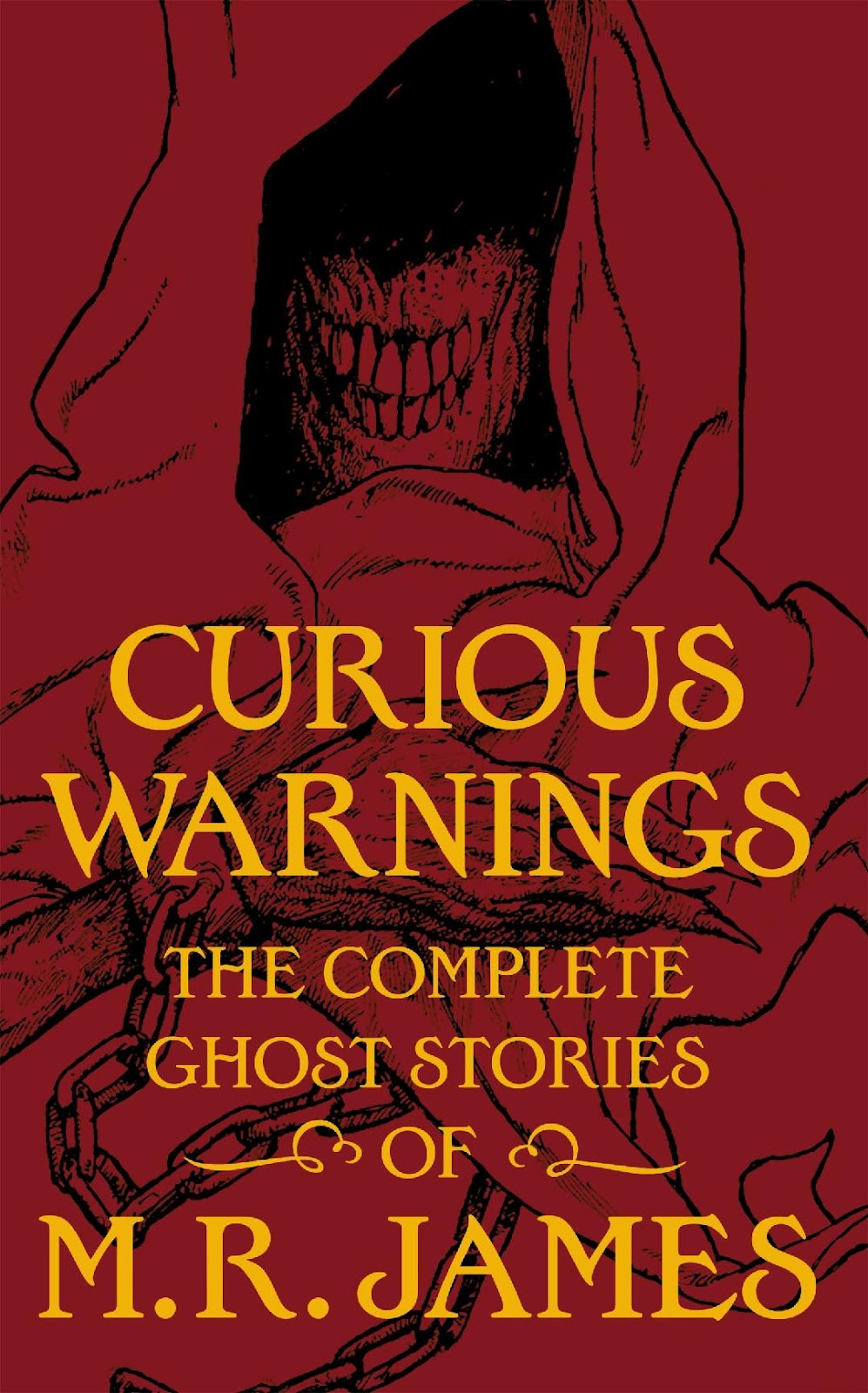
The Eliot line "Money in furs" is an excellent note on which to introduce Mr. Homberger (né Poschwitz) of M. R. James' "The Uncommon Prayer Book" (1925).
Here is how James' protagonist Mr. Davidson first meets him:
As he was in the front hall of the Swan that evening, making some investigations about trains, a small motor stopped in front of the door, and out of it came a small man in a fur coat, who stood on the steps and gave directions in a rather yapping foreign accent to his chauffeur. When he came into the hotel, he was seen to be black-haired and pale-faced, with a little pointed beard, and gold pince-nez; altogether, very neatly turned out.
He went to his room, and Mr. Davidson saw no more of him till dinner-time. As they were the only two dining that night, it was not difficult for the newcomer to find an excuse for falling into talk; he was[502] evidently wishing to make out what brought Mr. Davidson into that neighbourhood at that season.
"Can you tell me how far it is from here to Arlingworth?" was one of his early questions; and it was one which threw some light on his own plans; for Mr. Davidson recollected having seen at the station an advertisement of a sale at Arlingworth Hall, comprising old furniture, pictures, and books. This, then, was a London dealer.
"No," he said, "I've never been there. I believe it lies out by Kingsbourne—it can't be less than twelve miles. I see there's a sale there shortly."
The other looked at him inquisitively, and he laughed. "No," he said, as if answering a question, "you needn't be afraid of my competing; I'm leaving this place to-morrow."
This cleared the air, and the dealer, whose name was Homberger, admitted that he was interested in books, and thought there might be in these old country-house libraries something to repay a journey.
"For," said he, "we English have always this marvellous talent for accumulating rarities in the most unexpected places, ain't it?"
And in the course of the evening he was most interesting on the subject of finds made by himself and others. "I shall take the occasion after this sale to look round the district a bit; perhaps you could inform me of some likely spots, Mr. Davidson?"
But Mr. Davidson, though he had seen some very tempting locked-up book-cases at Brockstone Court,[503] kept his counsel. He did not really like Mr. Homberger.
The reader, whom James has spent half the story recruiting to Mr. Davidson's fan club, is meant to sympathize.
Homberger's machinations are swiftly established as he robs the rare anti-Cromwellian Prayer-Books from the chapel at Brockstone Court, leaving the trusting keeper Mr. Porter and his wife to take the blame.
The story then immediately commences its typically Jamesian revelry and resolution.
We learn Homberger also did business under the name Poschwitz. One of Poschwitz's flunkies recalls during police questioning:
Towards the afternoon I became tired of waitin' and I come upstairs to this first floor. The outer door what lead to the orfice stood open, and I come up to the plate-glass door here. Mr. Potwitch he was standing behind the table smoking a cigar, and he laid it down on the mantelpiece and felt in his trouser pockets and took out a key and went across to the safe. And I knocked on the glass, thinkin' to see if he wanted me to come and take away his tray;[511] but he didn't take no notice, bein' engaged with the safe door. Then he got it open and stooped down and seemed to be lifting up a package off of the floor of the safe. And then, sir, I see what looked to be like a great roll of old shabby white flannel, about four to five feet high, fall for'ards out of the inside of the safe right against Mr. Potwitch's shoulder as he was stooping over; and Mr. Potwitch, he raised himself up as it were, resting his hands on the package, and gave a exclamation. And I can't hardly expect you should take what I says, but as true as I stand here I see this roll had a kind of a face in the upper end of it, sir. You can't be more surprised than what I was, I can assure you, and I've seen a lot in me time. Yes, I can describe it if you wish it, sir; it was very much the same as this wall here in colour [the wall had an earth-coloured distemper] and it had a bit of a band tied round underneath. And the eyes, well they was dry-like, and much as if there was two big spiders' bodies in the holes. Hair? no, I don't know as there was much hair to be seen; the flannel-stuff was over the top of the 'ead. I'm very sure it warn't what it should have been. No, I only see it in a flash, but I took it in like a photograft—wish I hadn't. Yes, sir, it fell right over on to Mr. Potwitch's shoulder, and this face hid in his neck,—yes, sir, about where the injury was,—more like a ferret going for a rabbit than anythink else; and he rolled over, and of course I tried to get in at the door; but as you know, sir, it were locked on[512] the inside, and all I could do, I rung up everyone, and the surgeon come, and the police and you gentlemen, and you know as much as what I do. If you won't be requirin' me any more to-day I'd be glad to be getting off home; it's shook me up more than I thought for."
* * *
Did James intend his depiction of Homberger/Poschwitz to be understood as a burlesque crooked and conniving Jew?
Racist intention by an author has nothing to do with it. The ocean of Jew-hate in the imperialist world finds its channels to accommodating pens. I'm sure for James and his milieu glib and winking table-talk about grasping and chiselling middlemen who happen to have names like Homberger/Poschwitz was part of the oxygen of everyday life.
Combined with class scorn and ridicule marshalled against characters like the Porters, the use of Jew-hating tropes - regardless of authorial intent or awareness - mars an otherwise interesting supernatural tale.
Jay
9 March 2021